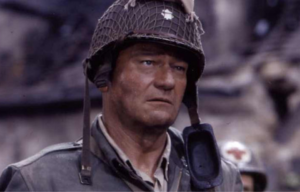
John Wayne remains one of the most iconic figures in American cinema. Over the course of his long career, he starred in numerous landmark films that shaped Hollywood’s golden age. Even long after his passing in June 1979, he continues to embody the rugged independence and traditional ideals often linked with mid-20th-century America. Yet questions still persist about his legacy—especially when it comes to whether his lack of wartime military service resulted from circumstance or a deliberate choice.
The United States enters World War II

Following the Japanese attack on Pearl Harbor on December 7, 1941, the United States officially entered the Second World War, signaling a shift in the conflict that would ultimately lead to the Allied victory just a few years later. The surprise assault resulted in public outcry, with President Franklin D. Roosevelt saying in an address the following day:
“No matter how long it may take for us to overcome this premeditated invasion, the American people in their righteous might will win through to absolute victory.”
Prior to the country’s declaration of war against Japan, the US had been supplying military equipment to its allies in Europe, as part of the Lend-Lease program. This meant that, while America wasn’t technically at war with Germany and Italy at the time, it was helping the likes of Great Britain fight the ever-growing enemy powers.
Hollywood actors enlist for military service

Several famous actors joined the ranks of the US military, despite having careers and families to support. The likes of Gene Autry, James Stewart, Henry Fonda and Clark Gable all enlisted, serving in the US Navy and Army Air Forces – and that’s just scratching the surface of those who volunteered.
Ronald Reagan, who’d recently gotten what would become his breakthrough role as Drake McHugh in King’s Row (1942), was also called to serve, having enlisted in the US Army Reserve in 1937. While never sent overseas, he was stationed across the US, and by the end of World War II had produced over 400 training movies for the military.
John Wayne didn’t serve in World War II

At the onset of World War II, John Wayne was still in the early stages of his rise to stardom, propelled by the success of Stagecoach in 1939. By the time his draft notice arrived, he had spent nearly two years building a promising Hollywood career.
Defending himself against accusations and questions

At times, John Wayne offered rather improbable explanations to defend himself against accusations of dodging the draft. On one occasion, he claimed that vital documents were left at home and that his recently separated wife would not allow him to retrieve them. On another, he insisted he couldn’t complete the forms in time because he lacked access to a typewriter.
Over the years, Wayne frequently embodied steadfast, heroic soldiers on screen, yet his own absence from military service during World War II became a source of deep personal regret. This unresolved burden haunted him throughout his later life, lingering until his death.
Easy to see where the critics were coming from

John Wayne’s failure to enlist was blamed on his splendid lifestyle, and considering the kind of life he was enjoying at the time, one can see where his critics were coming from.
In 1941, after separating from his wife, the Duke became involved in a torrid affair with a sensationally beautiful Latin actress. By then, he’d also become a universally loved actor among the female population, with many willing to spend anything in order to be in his company.
Wayne also regularly went out for all sorts of adventures, be it riding, hunting, fishing, swimming or yachting. His excursions to Mexico, where he’d heavily indulge in alcohol and women, were quite infamous at the time. On top of that, he’d also had major investments in various endeavors, such as a motel, a beach club, a country club, apartment buildings and even oil wells.
Did John Wayne refuse to serve because of his luxurious lifestyle?

It seems John Wayne chose to be a mega-millionaire, instead of an overworked and underpaid draftee, but no one knows for sure if his glamorous life was why he failed to join the ranks of the US military.
For instance, there are several instances that suggest he really wanted to enlist, and that on one occasion he applied to join the Office of Strategic Services (OSS). He was selected to join the Field Photographic Unit, but never heard about the appointment, given his acceptance letter from William J. Donovan was mistakenly sent to his ex-wife, who never told him about it.
Wayne also repeatedly told his close friend and director, John Ford, that he wanted to join the ranks. He once wrote to Ford and asked if he could join his military unit, but postponed his enlistment until he’d finished a couple of films.
Was John Wayne a draft dodger or was something else at play?

John Wayne was labeled a draft dodger

Irrespective of what kept him from joining the US military, John Wayne paid a heavy price for his absence from WWII, in the form of being labeled a “draft dodger.” The actor was shamed on numerous occasions by both distant acquaintances and those close to him, including John Ford, who embarrassed him during the filming of They Were Expendable (1945).
As the actor saluted for a scene (he portrayed LTJG. “Rusty” Ryan), Ford sarcastically said, “Duke, you can’t manage a salute that at least looks like you’ve been in the service?” Embarrassed and enraged, Wayne left the set immediately.
Despite being close friends who remained deeply connected for almost the entirety of their careers, a sore point was always there between them, due to Wayne’s failure to serve. He also got into fights with servicemen during the war because of his alleged draft dodging.
Becoming an ardent patriot in his later years

It was probably this guilt that made John Wayne an ardent patriot in the later decades of his life; his attitude toward other men who chose not to serve in subsequent conflicts was clearly dictated by intense nationalism. He criticized those who didn’t enlist for the draft during the Vietnam War.
More from us: Ernest Borgnine: The ‘McHale’s Navy’ Star’s Service During World War II
Since Wayne’s death, there’s been extensive debate as to whether his absence from the battlefield during WWII was justified or if he was a draft-dodging hypocrite. We’ll probably never know for sure what kept him from joining the military, as he took the real reason with him to his grave.