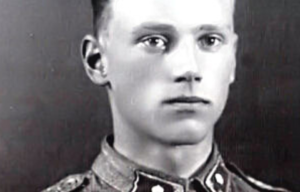
Lauri Törni’s early life and upbringing


Lauri Törni’s prowess in combat quickly earned him recognition beyond Finland’s borders. In 1941, he was chosen to train with the Waffen-SS in Austria, completing an intensive seven-week program with one of Germany’s most elite formations. Upon his return, he received a promotion to officer and was granted the German rank of Untersturmführer, roughly equivalent to a second lieutenant.
When the Continuation War erupted between Finland and the Soviet Union (1941–1944), Törni was given command of his own specialized unit, Detachment Törni. Focused on deep reconnaissance and sabotage operations, his team repeatedly infiltrated Soviet territory, disrupting supply lines and gathering vital intelligence. Their daring exploits frustrated Soviet commanders to the point that they placed a 3 million Finnish mark bounty on Törni’s head—a stark indicator of the danger he represented.
Lauri Törni’s continued service

The Continuation War ended in September 1944 with the signing of the Moscow Armistice. In the aftermath, the Finnish Army was demobilized, leaving Lauri Törni unemployed and concerned that the Russians might once again invade Finland.
Seeking to prepare for potential future conflicts with Russia, he joined a pro-German resistance movement in Finland. Törni underwent saboteur training in Germany and later joined a German unit fighting the Red Army near Schwerin. He served alongside the Wehrmacht until mid-1945, when he surrendered to the British Army and was sent to a prisoner of war camp. Eventually, Törni escaped and made his way back to Finland.
In 1946, Törni was arrested and prosecuted for joining the German Army. He was convicted and sentenced to six years in prison, but two years later, Finnish President Juho Kusti Paasikivi granted him a pardon. After his release, the decorated soldier fled to Sweden.
Lauri Törni makes it to America

While in Sweden, Lauri Törni fell in love and became engaged. Before getting married, however, he hoped to start a career working on Swedish vessels. In 1950, he jumped off one of these ships near Mobile, Alabama. He eventually made it to Sunset Park in Brooklyn, New York, which had an emigrated Finnish community.
After a few years of working as a carpenter and cleaner, Törni earned permanent residence. In 1954, the Finn joined the US Army and, before long, was training for the Special Forces. Törni trained troops in a number of skills, including guerrilla tactics, survival, skiing and mountaineering. During his time in the US military, he went by the name Larry Thorne.
Between 1958-62, Törni served in West Germany with the 10th Special Forces Group, gaining notoriety for his involvement in a search-and-rescue mission in Iran’s Zagros Mountains. He was then sent to Vietnam with Special Forces Detachment A-734. He was involved in a number of fire fights early on. For his bravery during a fierce battle in the Tịnh Biên District, Törni was awarded two Purple Hearts and a Bronze Star.
Lauri Törni’s death and legacy

Törni returned to Vietnam for a second tour, this time with the 5th Special Forces Group. Before long, he was transferred to Military Assistance Command, Vietnam – Studies and Observations Group (MACV-SOG), with whom he served as an advisor.
During a mission in October 1965, as part of Operation Shining Brass, the Sikorsky CH-34 “Choctaw” helicopter he was flying in went missing. Rescue crews were unable to locate the site of the crash. Following the incident, Törni was awarded the Legion of Merit and the Distinguished Flying Cross. He was also promoted to the rank of major.
More from us: Only 10 Crewmen Survived the Sinking of the Japanese Battleship Fusō – Out of 1,600
The bodies of Törni and those of his fellow soldiers weren’t discovered until 1999. Their bodies were flown back to the US and interred at Arlington National Cemetery. Törni, who was formally identified four years later, is the only known former member of the SS to be buried at the hallowed site.