Josephine Baker’s early life

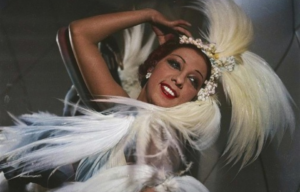
Josephine Baker was born on June 3, 1906, in St. Louis. Raised in poverty and without a father present, she left school between the ages of eight and ten to help support her family by taking on various odd jobs.
At 16, Baker joined a Philadelphia-based dance troupe and began touring as a performer. She later worked as a chorus girl in productions such as Shuffle Along and The Chocolate Dandies in New York City.
In 1925, she moved to Paris, where she quickly became a sensation—initially as a provocative dancer and later as a successful singer and film star. During this period, she associated with prominent cultural figures, including Ernest Hemingway, was sketched multiple times by Pablo Picasso, and formed a friendship with Jean Cocteau, who helped elevate her into one of the highest-paid entertainers in pre-war France.
By 1937, Baker had become a French citizen and was prepared to risk her life in service to her adopted country.
Beginning of the Second World War

When France declared war on Germany in September 1939, intelligence agent Jacques Abtey met with Josephine Baker to recruit her to the Deuxième Bureau de l’Etat-major général — the country’s military intelligence agency. The agency didn’t usually recruit female correspondents, but Baker was chosen because of her celebrity status.
Baker seemed to have just what the Deuxième Bureau was looking for. When Abtey first met with Baker, he recalled her saying, “France made me what I am. The Parisians gave me their hearts, and I am ready to give them my life.” Not only was she ready to give her life for France, she was also able to offer invaluable connections to the French Resistance.
As a result her celebrity status, Baker was able to secure invites to parties held at the Italian and Japanese embassies. She often wrote notes on her hands and arms about conversations she heard at these events, so she wouldn’t forget them. Despite being a rather dangerous practice, she’d just laugh and say, “no one would ever think I am a spy,” when confronted about it.
The German Army closes in on Paris

It was clear to Jacques Abtey that Paris was soon going to fall to the Germans, so he urged Josephine Baker to go south. After all, she symbolized all the things Germany’s regime hated. She was a successful, Black, bisexual woman who, in 1937, had married a Jewish man.
In June 1940, Baker packed up all of her priceless possessions (including a bed once owned by Marie Antoinette) and traveled 300 miles southwest. There, she rented a chateau and hid both refugees and French Resistance members in her new residence.
In November of that year, Abtey and Baker worked together to smuggle documents to Gen. Charles de Gaulle and the Free French Government-in-exile in London. Information the French Resistance had gathered was transcribed in invisible ink onto Baker’s sheet music, while important photographs were pinned under her dress. Claiming to be embarking on a South American tour, Baker and Abtey planned to get to London through neutral Portugal.
However, to do so, they first had to cross the Spanish border. While this initially caused concern for members of the Resistance and Abtey, who was posing as Baker’s ballet instructor, the Spanish border guards and German police were so captivated by her that the pair ended up having no problems crossing the border. Their documents had went completely undetected.
Baker continued her espionage work in Portugal and Spain

While Baker was in Portugal and Spain, she continued her espionage work at embassy parties, gaining details on Axis troop movements. Instead of writing notes on her arms, she wrote them on pieces of paper and attach them to her bra with a safety pin.
Later, she wrote that she wasn’t concerned about the tactic, saying, “My notes would have been highly compromising had they been discovered, but who would dare search Josephine Baker to the skin? When they ask me for papers, they generally meant autographs.”
Josephine Baker travels to North Africa

In January 1941, Josephine Baker, accompanied by Jacques Abtey, journeyed to Casablanca, Morocco, to set up a critical liaison and communications hub for the French Resistance. Baker arrived in grand fashion, traveling with two emeralds, 28 suitcases, a Great Dane, two mice, and three monkeys—an ostentatious display she believed would attract less scrutiny than a modest appearance.
While in Morocco, she worked closely with Resistance networks and used her influence to help Jewish refugees secure passports and escape German-occupied Eastern Europe. Her efforts were interrupted in June 1941 when she was struck by peritonitis, requiring multiple surgeries and keeping her hospitalized for eighteen months. Rumors of her death even circulated, but she later told Afro-American reporter Ollie Stewart that the reports were a “slight error,” joking that she was “much too busy to die.”
Even during recovery, Baker remained deeply involved in the Resistance. Diplomats and operatives met at her bedside to continue vital work. Once her health improved, she toured North Africa, performing for Allied troops and raising more than three million Francs for the Free French Army.
Beyond her performances, Baker supported both impoverished Parisians and the Free French cause by selling personal belongings. On one notable occasion, she auctioned her gold Cross of Lorraine for 300,000 francs, donating every franc to the Resistance.
Josephine Baker is awarded for her efforts

Although Josephine Baker refused to accept any money for her work in the French Resistance, she gained even more recognition than she’d had before the start of the Second World War. For her courageous efforts and service, the Women’s Auxiliary of the French Air Force made her an officer.
For the rest of her life, she wore her Air Force uniform for public appearances, including at the March on Washington in 1963.
In 1945, de Gaulle presented Baker with two prestigious honors, the Croix de Guerre and the Rosette de la Résistance. He also named her a Chevalier de Légion d’Honneur – the highest order of merit for military and civil action. When asked about these awards, she recalled asking why she was receiving them, feeling that “others deserved it more.”
Baker volunteered because she hated discrimination

When Baker was asked why she’d volunteered with the French Resistance, she recalled, ” Of course I wanted to do all I could to aid France, but the thing that drove me as strongly as did the patriotism was my violent hatred of discrimination in any form. The [German Army] were racists. They were bigots. I despised that sort of thing. I was determined that they must be defeated.”
More from us: The Tragic Story Behind One Man’s Refusal to Salute the Führer
We remember Josephine Baker not only as an African-American star who broke color barriers throughout her life, but also as a French Resistance fighter who risked her life for the freedom of all people.