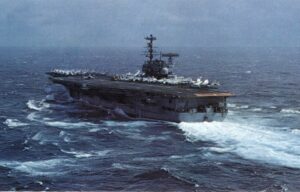
For nearly forty years, the USS Forrestal (CV-59) played a significant role in American naval operations, deploying worldwide as a key component of carrier strike capability. Despite its long service history, it is most commonly associated with the catastrophic fire on July 29, 1967, when an unintended rocket discharge triggered fuel ignition on the packed flight deck. The resulting chain reaction of explosions and fires engulfed the ship within minutes, leaving 134 sailors dead and many more injured in one of the most severe peacetime losses in United States Navy history.
In the aftermath, a comprehensive investigation led to sweeping changes across naval aviation procedures. The Navy implemented tighter regulations for handling munitions, strengthened shipboard firefighting systems, and greatly expanded training in damage control for crew members. The lessons learned from the Forrestal disaster ultimately transformed aircraft carrier safety standards and shaped operational practices for decades, significantly reducing the likelihood of similar incidents in the future.
The USS Forrestal‘s early service in the Atlantic and Mediterranean

The USS Forrestal was the lead ship in her class of aircraft carriers, commissioned on October 1, 1955. As the first carrier specifically designed to operate jet aircraft, she earned the distinction of being the Navy’s first “supercarrier.”
Forrestal began her service in the Atlantic, playing a role in the Suez Crisis, and was later deployed to the Mediterranean with the U.S. Sixth Fleet. Prior to providing air support during the Vietnam War, she was stationed off the coast of Beirut for three days during the 1958 Lebanon crisis.
In November 1963, Forrestal made history when a Lockheed C-130 Hercules completed 21 full-stop landings and takeoffs on her flight deck, setting a record for the largest and heaviest aircraft to ever land on an aircraft carrier. The following year, U.S. President Lyndon B. Johnson sent the carrier to Brazil to support the successful military coup that ousted President João Goulart.
The explosion on that fateful day

In June 1967, the USS Forrestal was positioned in the Gulf of Tonkin, near Vietnam’s northern coast in the South China Sea. During this time, aircraft from Attack Carrier Air Wing 17 (CVW-17) carried out numerous successful missions from the carrier, marking it as the Navy’s most intense air raid operation up to that point.
On July 29, 1967, an electrical malfunction aboard a McDonnell Douglas F-4B Phantom IIs on the Forrestal caused an Mk 32 “Zuni” Five-Inch Folding-Fin Aircraft Rocket (FFAR) to accidentally fire. It streaked across the deck and struck a parked, combat-ready Douglas A-4E Skyhawk, dislodging its 400-gallon external fuel tank. Senator John McCain was in the Skyhawk but managed to escape from the cockpit.
The collision ignited fuel from the A-4E, starting a fire that quickly spread. The initial explosion killed the first two firefighting teams trying to contain the blaze. Over the next five minutes, nine more explosions occurred following the rocket launch. The growing inferno eventually detonated a 1,000-pound AN-M65 bomb.
The losses onboard the USS Forrestal were devastating

The US Navy changed its training

Following the accident, the U.S. Navy carried out a comprehensive assessment of its firefighting training and safety practices. The review revealed widespread shortcomings, including weak safety standards, insufficient firefighting proficiency among crew members, and delayed responses during emergencies.
The Aircraft Carrier Safety Review Panel, headed by Rear Adm. Forsyth Massey, was tasked with examining the catastrophe. The panel’s findings concluded that, “Poor and outdated doctrinal and technical documentation of ordnance and aircraft equipment and procedures, evident at all levels of command, was a contributing cause of the accidental rocket firing.”
The USS Forrestal remained in service for several years after

Despite the devastating explosions on July 29, 1967, the USS Forrestal was not permanently sidelined. After extensive repairs, the carrier returned to active service, completing multiple deployments to the Mediterranean and participating in notable operations, including the 1981 Gulf of Sidra incident, support for Operation Earnest Will in the Middle East, and maintaining readiness throughout the Gulf War.