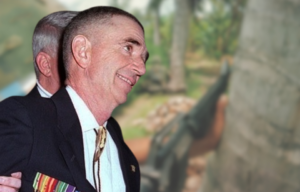
Carlos Hathcock: The legendary Marine Corps marksman whose world record for the longest sniper shot was unbeaten for 35 years

Photo Credits: 1. Bettmann / Getty Images (Blurred, contract decreased, blacks decreased in Canva). 2. Sgt. James Harbour / United States Marine Corps / Wikimedia Commons / Public Domain (background removed in Canva).

Carlos Hathcock is widely considered one of the greatest snipers in U.S. Marine Corps history, often compared to legendary marksmen such as Vasily Zaytsev, Lyudmila Pavlichenko, and Simo Häyhä. During the Vietnam War, Hathcock’s remarkable patience, precision, and composure under pressure led to nearly 100 confirmed kills, though some historians believe his actual total may have been higher. His effectiveness instilled fear among opposing forces, reportedly prompting the North Vietnamese to assign a top sniper—known as “Cobra”—with the specific objective of eliminating him.

Carlos Hathcock served valiantly with the US Marine Corps

Carlos Hathcock wearing his US military decorations on his chest
Carlos Hathcock being presented with the Silver Star, 1996. (Photo Credit: Sgt. James Harbour / Wikimedia Commons / Public Domain)

Carlos Hathcock was born in 1942 in Little Rock. From a young age, he developed exceptional marksmanship, often hunting to help provide food for his family. Driven by a strong sense of duty, he enlisted in the U.S. Marine Corps at just 17 years old.

By 1966, he was deployed to Vietnam during the Vietnam War, where he initially served as a military policeman. His outstanding shooting ability quickly drew the attention of his superiors, earning him a transfer to a sniper platoon led by Edward James Land. In that role, Hathcock was able to fully apply his skills, laying the groundwork for his lasting reputation as one of the Marine Corps’ most formidable and respected snipers.

Taunting enemy soldiers with a white feather

US infantrymen walking through a field while helicopters hover overhead
US 173rd Airborne Brigade supported by helicopters during the Iron Triangle assault, 1965. (Photo Credit: Tim Page / CORBIS / Getty Images)

Hathcock quickly gained a fearsome reputation, taking down numerous targets. He became known for wearing a white feather in his hat during missions, a bold taunt to enemy soldiers that earned him the infamous nickname “White Feather” among the North Vietnamese.

Due to his lethal effectiveness, the North Vietnamese Army placed a $30,000 bounty on his head, the highest of the war. Many snipers tried to claim the reward, but, as Marty Robbins’ song “Big Iron” says, “Many men had tried to take him and that many men were dead.”

Recounting his encounter with ‘the Apache woman’

Carlos Hathcock standing with his sniper rifle
Carlos Hathcock in Vietnam. (Photo Credit: Carlos Hathcock’s Son, Used with Permission)

Carlos Hathcock’s impact extended far beyond his unmatched marksmanship, touching some of the most intense and personal moments of the Vietnam War. Among these was his confrontation with a notorious Viet Cong operative known to U.S. Marines only as “the Apache woman.” Feared for her ruthless interrogation methods, she was infamous for torturing captured soldiers—sometimes within earshot of their units—with techniques meant not merely to inflict pain, but to crush morale. For many Marines, the trauma of her presence left psychological wounds as enduring as any battlefield injury.

On one patrol, Hathcock observed a small Viet Cong party moving through dense jungle. At first, everything seemed routine—but then one figure dropped deliberately into a familiar kneeling stance. Instantly, Hathcock recognized the feared interrogator. Remaining perfectly composed, he adjusted his scope, exhaled, and fired a single shot. In that moment, he neutralized one of the war’s most dreaded figures, ending a reign of terror that had haunted his fellow Marines for months.

Carlos Hathcock vs. ‘Cobra’

US Marine Corps portrait of Carlos Hathcock
Carlos Hathcock, 1959. (Photo Credit: USMC Archives / Flickr CC BY 2.0)

One of Carlos Hathcock’s most famous stories from the Vietnam War revolves around a tense standoff with “Cobra,” a highly skilled North Vietnamese sniper tasked with killing him. Aware of the danger Cobra posed, Hathcock prepared for a life-or-death encounter, patiently waiting for the right moment to strike. While moving through the dense Vietnamese jungle, Hathcock tripped over a fallen tree—just as Cobra fired. The shot missed by mere inches, hitting Hathcock’s spotter’s canteen instead.

Following standard sniper tactics, Cobra quickly changed his position, and both snipers began to relocate. However, Cobra made a critical mistake—he set up with the sun behind him, exposing his location. Hathcock noticed the error, took careful aim, and shot Cobra before he had a chance to fire again.

How many enemy soldiers did Carlos Hathcock dispatch?

Five American soldiers aiming their weapons while crouching in a small waterway
US Army troops preparing to advance on a Viet Cong sniper positions. (Photo Credit: Hulton Archive / Getty Images)

Carlos Hathcock concluded his Vietnam service with 93 confirmed kills, setting a world record for the longest sniper shot, which stood unbeaten for 35 years. Given the methods used to confirm kills during the war, his actual total is likely much higher, with Hathcock himself estimating that he had between 300 and 400 kills. His unmatched skill and precision made him a legend in sniper history.

More from us: Hugh Thompson Jr. Saved Innocent Civilians During the Mỹ Lai Massacre – He Was Deemed a Traitor

Carlos Hathcock is remembered as a heroic Marine Corps sniper who made a significant impact on the Vietnam War. He passed away on February 22, 1999, at the age of 56.

Jesse Beckett

Jesse is a U.K.-based writer for Tank Roar, passionate about military history and storytelling through digital content. With a special focus on tanks and ships, Jesse brings a deep enthusiasm for historical narratives to every piece.