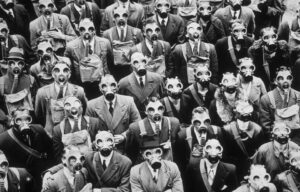
World War II is often remembered through stories of bravery, sacrifice, and decisive victories. Yet the full history of the conflict is far more complex. Beneath the familiar narratives are deeply troubling episodes that reveal human cruelty, moral compromise, and immense suffering experienced by both soldiers and civilians. Even in a war fought against brutal regimes, ethical lines were sometimes blurred, and the human cost was overwhelming.
Here are five unsettling and less frequently discussed aspects of World War II that challenge the simplified, heroic versions often presented in popular history.
Ni’ihau Incident

Airman First Class Shigenori Nishikaichi was a Japanese pilot who participated in the second wave of the attack on Pearl Harbor, taking off from the aircraft carrier Hiryū. Prior to the secretive assault, all pilots were told that, in the event of trouble, they were to fly 30 minutes to the Hawaiian island of Ni’ihau and await pickup by a submarine.
While he’d been tasked with combat air patrols over Pearl Harbor, Nishikaichi never made it to the US naval base. His Mitsubishi A6M “Zero” ran low on fuel and he was forced to crash land on Ni’ihau. He believed, like the rest of the Japanese, that the island was uninhabited. This, however, was not the case.
Ranch hand Hawila “Howard” Kaleohano came upon the scene and, aware of the strained tensions between the United States and Japan, seized the pilot’s pistol and papers, after which he was taken for medical treatment. A translator was brought in to bridge the language barrier between Nishikaichi and Ni’ihau’s inhabitants, with the latter unaware of the attack on Pearl Harbor.
Yoshio Harada and his wife, Irene, were of Japanese descent and spoke to the young pilot. While they were informed of the attack, they chose to keep this information to themselves. It wasn’t until a radio report that night that they learned of what happened and placed Nishikaichi on house arrest.
What followed was chaos and terror as the Japanese pilot tried to escape the island. Harada had stolen back Nishikaichi’s pistol, which was used to shoot Kaleohano. The ranch hand’s house was also set ablaze, and hostages were taken. One of them was shot three times, but miraculously survived and took out the airman first class. Harada wound up taking his own life.
Today known as the Ni’ihau Incident, this little-known event was one of the most unsettling moments of WWII.
One of the shortest soldiers captured one of the tallest

Before Germany’s invasion of Poland in September 1939, Jakob Nacken had already gained fame as a circus attraction. Standing an astonishing seven feet, three inches tall, the “Giant of the Rhineland” performed across the globe before being drafted as the tallest soldier to serve in the German Wehrmacht during World War II.
At the other extreme stood Canadian Corporal Eldon “Bob” Roberts, who measured just five feet, three inches tall, placing him among the shortest combatants of the war.
Their unlikely meeting occurred on September 26, 1944, several months after Roberts had come ashore during the D-Day landings. While stationed in Calais, Roberts and his comrades captured a German artillery crew—among the 250 prisoners of war was the towering Jakob Nacken himself. A photograph of their meeting, with the colossal German and the diminutive Canadian, became an enduring—and unexpectedly lighthearted—symbol of the war’s odd encounters.
Pilots had astonishing mortality rates

This item may be the most familiar on our list of grim realities, yet it remains crucial to acknowledge.
- New Supermarine Spitfire pilots in the Battle of Britain had an average life expectancy of only four weeks.
- Approximately 71 percent of bomber crew members were either killed or went missing in action.
- More than 13,000 American pilots died during training in the U.S. before they even had the chance to face an enemy.
George H.W. Bush narrowly missed certain death

George H. W. Bush was raised in an influential family, with his father, Prescott Bush, working as a banker and serving as a U.S. senator. Despite his privileged upbringing, Bush pursued a path in the military, enlisting in the U.S. Navy on the day he turned 18. He subsequently earned a commission as an ensign in the Naval Reserve, becoming one of the youngest naval aviators at the time.
While stationed aboard the USS San Jacinto (CVL-30) in the Pacific, Bush flew a Grumman TBF Avenger, carrying out his first combat mission against Japanese positions on Wake Island in 1944. On September 2 of that year, his aircraft was struck by enemy fire during a bombing operation over Chichijima. Despite the damage, Bush managed to release his bombs before abandoning the stricken plane. He narrowly escaped death and the aircraft and was eventually picked up by the American submarine USS Finback (SS-230).
Other American airmen brought down near Chichijima experienced far more tragic outcomes. Several fell into Japanese captivity and were subsequently executed, while historical records reveal that some of their remains were consumed by their captors. These atrocities became among the most disturbing incidents associated with the Pacific theater of World War II.
Bush later continued flying combat operations in the Philippines and participated in preparations for a planned invasion of Japan. However, the invasion never took place, as the atomic bombings of Hiroshima and Nagasaki led to Japan’s surrender, bringing the Second World War to a close.
A 12-year-old enlisted in the US Navy

After the attack on Pearl Harbor, a wave of patriotism swept the United States, inspiring countless young men to join the military. Among them was Calvin Graham—only 12 years old—who was determined to serve despite being far below the Navy’s minimum age requirement.
Using a loophole that allowed enlistment with parental consent, Graham forged his mother’s signature and even borrowed a notary stamp from a local hotel. Claiming he was visiting relatives, he traveled to Houston, Texas, and convinced a Navy dentist—who noted his young age—to remain silent.
Once trained as an anti-aircraft gunner, Graham was assigned to the USS South Dakota (BB-57). He fought in the Battle of the Santa Cruz Islands and the brutal Naval Battle of Guadalcanal, sustaining injuries but prioritizing the survival of his shipmates over his own well-being.
Graham’s secret was eventually exposed when his mother spotted him in a newsreel and alerted the Navy, resulting in a dishonorable discharge and an abrupt end to his extraordinary service.
While many underage boys lied to enlist during World War II, Graham’s story is particularly striking not only for his age but also for the struggles that followed. He never returned to school, became a father, experienced a divorce by age 17, and later re-enlisted in the Marine Corps—only to be discharged again after breaking his back. His brief but heroic military career was eclipsed by hardship, making his tale both tragic and remarkable.
More from us: The Tragic Last Stand of the HMS Hood Against Germany’s Prized Battleship Bismarck
In 1978, Graham’s dishonorable discharge was changed to honorable after writing a letter to then-US President Jimmy Carter.