In the blockbuster adaptation of Andy Weir’s Project Hail Mary, audiences are captivated by Eva Stratt (played by Sandra Hüller). As the head of a global task force, Stratt is granted “absolute authority” by the UN to seize assets, bypass international law, and strip-mine the planet’s resources to build a starship. It’s a thrilling sci-fi trope: a “logistical dictator” saving humanity through sheer administrative force.
But for students of military history, Stratt isn’t just a fictional character. She is a mirror of the most desperate moments of the 1940s. When the world last faced an existential threat, the “Project Hail Mary” of the 20th century wasn’t a starship—it was the Arsenal of Democracy. And it required its own real-life Eva Stratt to make it happen.

The Man Who “Out-Produced” the Apocalypse

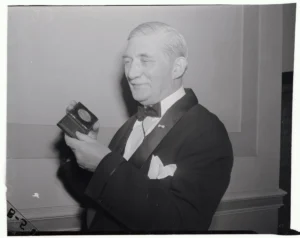
While the film gives us Stratt, history gives us William S. Knudsen. In 1940, as Germany’s shadow stretched across Europe, President Franklin D. Roosevelt realized that bravery alone wouldn’t win the war; industrial might would.
Roosevelt summoned Knudsen, the president of General Motors, to Washington. Much like Stratt in Project Hail Mary, Knudsen was given an unprecedented mandate: transform a civilian economy into a war machine overnight. He wasn’t just an advisor; he was a titan of production with the authority to command private industry to pivot from Cadillacs to tanks.
The “Stratt” Protocol: Speed Over Sovereignty
In Project Hail Mary, Stratt famously ignores red tape, implying that laws are for people who aren’t facing extinction.
During the early 1940s, the US and UK followed a strikingly similar philosophy. Knudsen and his counterparts, like the UK’s Lord Beaverbrook, operated with a level of autonomy that would be unthinkable in peacetime. Beaverbrook, tasked with increasing fighter production during the Battle of Britain, notoriously “stole” aluminum from other government departments and set unrealistic production targets so that the industry would push itself to do its best.

Both the fictional Stratt and the historical Knudsen understood a grim reality: in a race against time, bureaucracy is a lethal enemy.
Engineering the Impossible: From the Hail Mary to the B-24
The most “Andy Weir-esque” moment in WWII history is perhaps the Willow Run bomber plant. Much like the frantic construction of the Hail Mary ship, Henry Ford and Knudsen envisioned a factory that could produce a B-24 Liberator bomber every single hour.
Critics said it couldn’t be done. The B-24 had over 1.2 million parts; it was a “starship” of its era. Yet, by applying the same “solution-oriented” mindset seen in the movie’s scientific breakthroughs, the plant eventually hit its goal. By the end of the war, the US was out-producing the entire Axis powers combined. It was a logistical miracle achieved through the same “absolute authority” depicted on the big screen today.
Why the “Hail Mary” Strategy Still Fascinates Us
Why does the figure of the “all-powerful administrator” resonate so strongly with modern audiences? Perhaps because we recognize that some problems—be it an alien microbe or a global defense threat—cannot be solved by committees.
Project Hail Mary reminds us that science and engineering are the tools of survival, but logistics is the engine. As you watch Ryan Gosling race against the clock among the stars, remember that over eight decades ago, men like William Knudsen were doing the exact same thing on the factory floors of Detroit. They didn’t have a “coma gene” or alien alloy, but they had the same desperate, “Hail Mary” spirit that saved the world.
If you liked this story, check out: