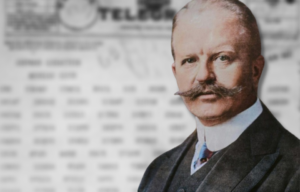
Germany hoped to keep the United States out of World War I

The Zimmermann Telegram was the culmination of a years-long effort by Germany to start a war between Mexico and the US. It was hoped that, with America fighting Mexico, the country’s military and manufacturing sectors would have limited capacity to join the war in Europe or provide resources to the Allies. At one point, the German government even sent a Mexican official a sum of well over $10 million dollars to begin a conflict with the US.
Keeping the US and its exports away from Europe was massively important to the Central Powers, as Germany believed it could achieve victory, so long as America wasn’t on the scene.
Attacking shipping between the United States and Britain

Earlier in the war, Germany had stopped US exports by attacking merchant shipping in the Atlantic Ocean with their U-boat fleet. In 1915, the county began employing tactics close to unrestricted submarine warfare, attacking any vessel that sailed through a specified area. This limited imports arriving in the United Kingdom by sinking them before they could arrive, and it affected the number of ships sent, due to fears over their destruction.
This strategy became so brutally effective that the US, who, at this point, wasn’t actively involved in WWI, demanded Germany put a stop to the seaborne attacks. It did – for a while, at least. By 1917, the country’s naval forces were planning to resume their unrestricted submarine warfare, in a last-ditch effort to starve the British.
It was known an all-out assault on US merchant shipping would bring the country into the war, but the Germans estimated that, if they could delay America’s involvement, they could beat the Allies in Europe before troops arrived. This is what the Zimmermann Telegram was for.
The Zimmermann Telegram

The Zimmermann Telegram was sent on January 17, 1917 by Arthur Zimmermann, the State Secretary of Foreign Affairs of the German Empire, to Heinrich von Eckardt, Germany’s ambassador to Mexico. It inform von Eckardt that, if the resumption of U-boat attacks on Atlantic shipping poised America to enter the conflict, he was to present Mexico with an offer to declare war on the US, with German funding.
The telegram read:
“We intend to begin on the first of February unrestricted submarine warfare. We shall endeavor in spite of this to keep the United States of America neutral. In the event of this not succeeding, we make Mexico a proposal of alliance on the following basis: make war together, make peace together, generous financial support and an understanding on our part that Mexico is to reconquer the lost territory in Texas, New Mexico, and Arizona.
“The settlement in detail is left to you. You will inform the President of the above most secretly as soon as the outbreak of war with the United States of America is certain, and add the suggestion that he should, on his own initiative, invite Japan to immediate adherence and at the same time mediate between Japan and ourselves.
“Please call the President’s attention to the fact that the ruthless employment of our submarines now offers the prospect of compelling England in a few months to make peace.
“Signed, ZIMMERMANN.”
Decoding the Zimmermann Telegram

The message that came to be known as the Zimmermann Telegram was sent through U.S. communication lines routed via England. Unbeknownst to both German and American officials, British intelligence was intercepting these transmissions. The telegram was captured and delivered to British codebreakers, who were able to decipher it using their prior success in cracking German encryption systems.
Once the contents were revealed, British leaders immediately recognized both the danger and the strategic opportunity. They had long hoped to draw the United States into World War I, but disclosing the message presented a dilemma. If released outright, Germany would realize its codes had been broken, while the Americans might discover that Britain had been secretly monitoring their communications.
To solve this, British intelligence devised a careful workaround. An agent operating in Mexico obtained a copy of the telegram and passed it to U.S. officials. Because the message was encoded using an older German cipher—one the British were willing to sacrifice—it allowed the Germans to remain unaware of the full extent of the breach.
With these concerns addressed, Britain ultimately delivered the decoded telegram to the United States, setting the stage for a major shift in the course of the war.
Response to the Zimmermann Telegram

The message, combined with Germany restarting unrestricted submarine warfare, enraged the American public, who went from opposing involvement in WWI to actively seeking it. Just three months after the Zimmermann Telegram was sent, the country officially joined the war. A little over 18 months later, the conflict ended with Germany’s defeat.
While the US response is the most impactful, the Mexican one is, perhaps, the most ironic. After receiving the message, Mexican President Venustiano Carranza sought the opinions of his military officials on Germany’s offer. They concluded that a German-backed war with the US wasn’t in Mexico’s best interests, due to political instability, a vastly inferior army and wanting to avoid upsetting relations with South American nations.
More from us: The Future, Today – Why Lasers Are the Next Big Thing for the US Army
The Zimmermann Telegram was intended to ensure America stayed out of the war and guarantee a German victory in Europe. Instead, it caused the immediate and nationally-supported declaration of war by the US, mobilizing troops and reinforcing the Allies in Europe, ultimately leading to Germany’s eventual downfall.