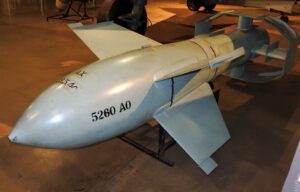
Modified PC 1400

The Fritz X was conceived by Max Kramer and produced by Ruhrstahl AG, evolving from the PC 1400 (1,400 kg) bomb. Weighing 3,450 pounds, the weapon featured a powerful 710-pound warhead capable of penetrating up to 28 inches of armor when dropped from altitudes between 18,000 and 20,000 feet.
In 1940, various iterations were tested to find the ideal design. The X-2, designed for greater speed and outfitted with an infrared homing system, was discontinued after only one unit was built. In contrast, the X-3, which was bulkier and heavier, achieved speeds of up to 900 MPH. Despite its impressive capabilities, the X-1 emerged as the primary model due to its simplicity and ease of development.
By 1941, the Luftwaffe initiated comprehensive testing of the missile, and by 1943, the project had progressed to full-scale production.
Fritz X specs

The Fritz X represented a significant leap in wartime technology, boasting a sleek aerodynamic frame and a sophisticated radio-guidance system known as the Kehl-Strasbourg joystick. Its tail assembly featured a distinctive twelve-sided shape with four fins—two elongated and equipped with spoilers for directional control. To maintain stability in flight, the weapon relied on dual gyroscopes, while its nose was outfitted with cross-shaped wings that varied slightly in size.
These precision-guided bombs were typically deployed from aircraft such as the Dornier Do 217K-2 and the Heinkel He 177A Greif. Once released, bombardiers followed the missile’s descent by watching the flares attached to its tail, allowing them to guide it manually. The Fritz X could shift its trajectory mid-flight via its radio-controlled spoilers; however, its success depended heavily on whether Allied forces could disrupt the radio link—a vulnerability that increasingly limited its operational impact.
Success in the Mediterranean Theater

The Fritz X made its debut in combat on July 21, 1943, during a raid on the Port of Augusta in Sicily. At that time, no confirmed hits were reported, and the Allies remained largely unaware of the Germans’ use of radio-guided missiles. However, the Fritz X achieved its most notable success in a subsequent attack on the Italian fleet in September 1943.
Following the arrest of Benito Mussolini, the Italian government entered into negotiations with the Allies. On September 8, the Supreme Allied Command in Europe announced the signing of an armistice. A plan was devised to transfer the Italian naval fleet to Allied ports in Tunisia and Malta. However, the Germans quickly caught wind of the plan and devised their own strategy to intercept the convoy, aiming to prevent the ships from reaching their intended destinations.
Sinking of Roma (1940)

A formidable Italian naval force—comprising three battleships (Roma, Vittorio Veneto, and Italia), six cruisers, and eight destroyers—sailed south along Corsica’s western coast toward Sardinia and eventually Tunisia. Despite their impressive formation, their fate was sealed from the skies. Around midday, six German Dornier Do 217K-2 bombers from Gruppe III of Kampfgeschwader 100 “Wiking” attacked, each armed with a single Fritz X precision-guided bomb, specifically designed to penetrate battleship armor.
Fritz X missiles sink the HMS Spartan (95) and others

Just minutes after the initial strike, a second Fritz X slammed into the Roma, this time exploding in her forward engine room and triggering a devastating magazine detonation. The blast claimed the life of Vice Adm. Carlo Bergamini, the ship’s captain, along with 1,393 crew members. Within half an hour of the first impact, the Roma broke apart and capsized.
In the ensuing days, Luftwaffe pilots continued to employ Fritz X bombs with deadly effect, sinking the British cruiser HMS Spartan (95) and the destroyer Janus (F53), as well as multiple merchant vessels in the vicinity. Additional attacks inflicted severe damage on the British battleship HMS Warspite (03) and cruiser Uganda (66), as well as the American light cruisers USS Philadelphia (CL-41) and Savannah (CL-42).
The Fritz X made German aircraft vulnerable

Although the Fritz X initially showed significant promise, its operational weaknesses soon became apparent. German bombers were forced to fly straight and level during deployment, making them easy targets for enemy defenses. After release, crews had to reduce speed and visually guide the glide bomb, further increasing their exposure to attack.
Allied forces quickly capitalized on these vulnerabilities. Fighter aircraft proved especially effective, breaking up bomber formations and disrupting targeting precision. In addition, smoke screens were used to obscure visibility, making it more difficult for crews to track and control the weapon.
The introduction of electronic countermeasures dealt a further blow, as Allied forces jammed the bomb’s radio control signals, greatly diminishing its effectiveness. Combined, these countermeasures significantly reduced the threat once posed by the Fritz X.
Fritz X failed to meet the Luftwaffe‘s expectations

More from us: The German V-1 ‘Buzz Bomb’ Was Developed to Terrorize the British Public
The original production goal for the Fritz X called for 750 units each month, but reality fell far short. Between April 1943 and the program’s end in December 1944, only 1,386 were built—and of those, 602 were set aside strictly for testing and training. Accuracy also proved disappointing: in combat, the weapon successfully struck its intended target only about one-fifth of the time, well below the Luftwaffe’s expectations.
Even with these limitations, the Fritz X marked an important step forward, laying the groundwork for later generations of missiles that used spoiler-control systems.