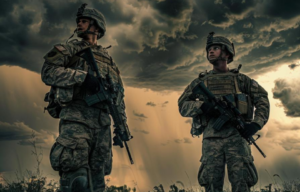
The United States Armed Forces is composed of deeply dedicated service members who are prepared to put everything on the line for their fellow troops and to achieve their missions. Along with this sense of duty, a wide range of unique superstitions has developed over time—many of them tied to the unpredictability of the weather.
Don’t wash that mug!

Here’s a naval tradition that often catches people off guard: among sailors in the United States Navy, cleaning your coffee mug is widely considered a bad idea.
The reasoning goes beyond simple habit. Many believe that washing away the built-up residue risks inviting the wrath of Neptune, the mythical ruler of the sea, and could bring bad luck—or even disaster—upon the ship.
At the same time, a mug serves as a quiet badge of experience. The more stained and weathered it appears, the longer its owner is presumed to have served. Because of this, tampering with a senior sailor’s mug isn’t just discouraged—it can carry real consequences within the ship’s hierarchy.
Sailor’s delight or warning?

We’ve all heard the rhyme, “Red sky at night, sailors’ delight. Red sky at morning, sailors’ warning,” but did you know its origins lie in the Navy? Back before weather radar was invented, sailors used other methods to predict the weather, including looking at the sky.
The superstition goes that a red sky in the evening means the next day’s weather will be calm. On the flip side, a red sky at dawn means the day will see stormy conditions. It’s one many follow, but, according to scientists, it’s only accurate in some instances.
The HOG’s tooth

No, we’re not talking about an actual hog. HOG stands for “Hunter of Gunmen,” and it’s a title reserved for US Marine Corps snipers who’ve taken out an enemy soldier. Marines who fully complete their training are also presented with a symbolic one upon graduating.
According to legend, everyone has a bullet with their name on it. It’s just a matter of when and where they’ll encounter it. In order for a Marine to collect it as their own, they must be placed in the combat zone. When they encounter an enemy sniper, they must defeat them, steal their gun and remove the bullet from the chamber.
Once you’re in possession of the HOG’s tooth, you’re essentially invincible, as you’ve acquired the bullet destined to end your life. It’s a symbol of good luck and a way to intimidate enemy snipers.
Fly with broken wings

When a pilot graduates from training, they’re presented with a pair of wings. While a symbol of great accomplishment, these are considered bad luck if kept whole. That’s why aviators break them in half.
Once halved, the pilot keeps one side and gives the other to someone they cherish. They keep them in a safe place until their death, when the two halves are finally brought back together. It’s a touching gesture, meant to indicate they’ll be granted good luck in the afterlife.
Candy isn’t always so sweet

While the majority of us would love to see candy in our lunch bags, there’s one type a Marine doesn’t want to find in their MREs: Charms. These multicolored hard candies are harbingers of bad luck, so it’s best to steer clear of them at all costs.
Charms have been rife with speculation since the Gulf War. Known as “the curse of the Charms,” rumor has it they cause bad luck when ingested. A vehicle is said to break down if someone consumes a lemon square, while raspberry indicates death is near. The worst, however, is lime. Eat one and you risk getting caught in a rainstorm.
The bad reputation reached a point where Marines would throw the candy away, and drill instructors warned recruits to get rid of them when in the field. They were removed from MREs in 2007, but not before rumor spread that Marines were throwing them at enemy forces during combat.
Anything for good luck

It’s not uncommon for military personnel to bring good luck charms with them during missions. From US Air Force pilots to soldiers on the ground, everyone needs something to get them through the dangers of fighting.
Soldiers during the First World War sewed black cats onto their uniforms as a way of bringing them good luck in the trenches. Similarly, fighter pilot Edwin Parsons attached a black cat plushie to his aircraft for good luck. It’s said the stuffed animal even took a bullet for him!
It’s not surprising this holds such a strong place in military culture. New Zealand Flying Officer Jack Hoffeins forgot to bring his good luck charm — an airman doll — during his last flight. He never returned, and the doll now sits in the Air Force Museum of New Zealand, in his memory.
Notice anything odd about the uniform?

Over the years, the camouflage of a soldier’s uniform has changed drastically. It’s used to protect them while on deployment, ensuring they’re hidden from enemy eyes. However, some have noticed a unique symbol on US Army Combat uniforms.
Known as “digital camouflage,” it’s often used to allow a soldier to be hidden from a variety of ranges. Some soldiers claim to see a blotch on their uniforms that resembles a key with a skull base. It’s dubbed the “skeleton key” and many believe it to be a target for enemy bullets.
Handle the flag with care

While this superstition isn’t exclusive to the military, service members take it very seriously. The strict observance of these rules aligns with the broader values and mission of the Armed Forces. For many, the American flag is a revered symbol of freedom, and it must always be treated with the utmost respect.
There are precise guidelines for handling and folding the flag, as well as strict rules about what not to do. Chief among these is ensuring the flag never touches the ground—a breach that is not only seen as bad luck but also as a profound act of disrespect.
Don’t say ‘rain’

In case you couldn’t tell, weather plays a big role in the lives of servicemen. This is why it should come as no surprise that they look warily upon anything to do with the rain. In fact, they dislike it so much that just saying the word is considered bad luck.
More from us: The Gross But Life-Saving Chocolate Of WW2
Bad weather can hurt the success of a mission, so soldiers take whatever advantage they can to ensure the skies remain clear. They believe even the clearest days can take a stormy turn, so no mention of rain can happen. You don’t want to risk being considered the jinx of your unit.