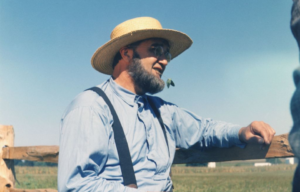
Amish Christianity places a heavy emphasis on plainness, humility, and restraint, values that shape virtually every part of daily life within the community. For Amish men, wearing a beard is far more than a style choice—it serves as a meaningful symbol of adulthood, marriage, and adherence to the faith’s core principles.
Notably, Amish men grow beards without mustaches, a distinction rooted in history rather than fashion. In the 1800s, mustaches were commonly associated with soldiers and military authority. By forgoing them, Amish men intentionally distance themselves from symbols of warfare, reinforcing their longstanding commitment to pacifism and nonviolence.
Amish beards pay homage to the Bible
Photo Credit: Mark Wilson / Getty Images
Though the Amish share close connections with Mennonite traditions, they distinguish themselves through practices that emphasize their unique identity. Among the most notable is the wearing of beards, which they view as a reflection of the Bible and its teachings. In the time period described in scripture, men commonly wore full beards since razors were not available, and Amish men adhere to this tradition as an expression of faith and continuity with the past.
Beyond its link to tradition, the beard carries a profound cultural weight. It is not simply a matter of refraining from shaving but serves as a signifier of maturity. In Amish life, only married men grow beards, marking the transition into manhood. This represents both spiritual devotion and a man’s commitment to his role within the family.
Pacifism is a core Amish belief
Photo Credit: Doreen Spooner / Keystone Features / Getty Images
Leviticus 19:27 – “Do not cut the hair at the sides of your head or clip off the edges of your beard”– The Amish take this teaching to heart and follow it without exception.
Nonviolence is a central pillar of Amish faith, guiding their steadfast adherence to pacifism and non-resistance. Community members are taught to avoid confrontation whenever possible and to respect authority, even when they believe an injustice has occurred. This principle extends to their absolute rejection of warfare, making military service incompatible with their religious convictions.
Because mustaches were historically associated with soldiers and martial culture, Amish men traditionally choose not to grow them. The absence of a mustache serves as a visible expression of their commitment to peace, reinforcing their identity as a people devoted to humility and nonviolent living.
Why don’t Amish men sport mustaches?
Photo Credit: Fototeca Gilardi / Getty Images
Nowadays, sporting a mustache is a style preference, but historically, it was once a symbol of military service. Facial hair has been linked to warfare and the might of soldiers, especially in cultures where beards and mustaches are seen as symbols of masculinity. Even now, in some regions, soldiers wear facial hair to earn respect.
The British Empire made mustaches mandatory for soldiers
Photo Credit: The Print Collector / Getty Images
The British Empire, for example, held a strong preference for mustaches, even making it mandatory for soldiers at one point. This regulation remained in place until World War I, when maintaining a mustache became less of a priority and impractical due to the difficult conditions in the trenches on the Western Front.
Furthermore, the onset of gas attacks on battlefields raised worries that facial hair could prevent gas masks from sealing properly against the skin. As a result, the mustache requirement was abolished in October 1916.
The Amish beard avoids all association with the military
Historically linked to soldiers and military authority, mustaches are deliberately avoided by the Amish to emphasize their separation from war and violence. This tradition allows men to maintain long beards—a potent symbol of religious devotion—while signaling their dedication to pacifism. The beard also conveys personal meaning: a full beard signifies marital status, acting as a visual substitute for a wedding ring and reflecting a man’s obligations to his family and community.