War often calls for courage from more than just soldiers. Ordinary civilians, acting with quiet determination, sometimes risk everything to perform acts of selflessness and bravery that rival the heroism of troops in combat.
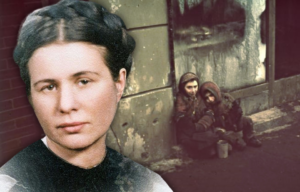
Irena Sendler exemplified such extraordinary courage. A compassionate yet resolute Polish social worker, she orchestrated a daring rescue operation with the help of a network of volunteers, smuggling 2,500 children out of the Warsaw Ghetto during World War II. Remarkably, despite the magnitude of her actions, global recognition for her bravery came only late in her life.
Irena Sendler’s father was devoted to doing good

Irena Sendler was born in 1910 in Warsaw, Poland. Her father’s dedication to doing the right thing, regardless of the risk, must have certainly made an impression on her when she was young, despite the tragic consequences of his unshakable devotion for good; in 1917, he died from typhus, having contracted it while treating patients other doctors refused to care for.
Many of his former patients were Jewish, and in gratitude for what he’d done for them, community leaders sponsored his daughter’s education.
German invasion of Poland

When Germany invaded Poland in September 1939, Irena Sendler immediately began to help local Jews by offering them food and shelter. However, once the Germans had established the Warsaw Ghetto, it became much more difficult for her to provide help.
On November 16, 1940, the Warsaw Ghetto was completely sealed off from the rest of the city. Sendler realized she’d have to adopt an alternative – and more covert – approach to helping those in need.
Horrible conditions within the Warsaw Ghetto

Surrounding the Warsaw Ghetto was a 10-feet-high concrete wall topped with barbed wire and broken glass. All access points were heavily guarded by Germans troops. Getting in, as an ordinary Polish citizen, would have been nearly impossible.
Despite this, Irena Sendler knew she had to help. Conditions for the nearly 400,000 Jews crammed into the ghetto were horrific. As a result of severe overcrowding, a lack of sanitation and miserly rations (only 200 calories per day), starvation and disease ran rampant.
Irena Sendler goes from social worker to nurse (on paper)

When Irena Sendler realized that her official identification as a social worker wouldn’t grant her access to the Warsaw Ghetto, she obtained forged documents listing her as a nurse. This clever ruse enabled her to enter and exit the heavily controlled area with far greater ease.
Initially, Sendler focused on smuggling essential supplies—medicine, food, and clothing—into the ghetto. Though these acts might have seemed minor, they carried immense risk. Beginning in October 1941, the German authorities had decreed that aiding Jews was a serious crime, punishable by death.
Undeterred, Sendler pressed on with her dangerous work. She not only delivered vital provisions but also created falsified paperwork to protect the ghetto’s inhabitants, demonstrating extraordinary courage and resourcefulness in the face of lethal danger.
Irena Sendler joins the underground Resistance movement

In 1942, when the German military began deporting Jews from the Warsaw Ghetto to the notorious Treblinka extermination camp, it became clear to Irena Sendler that time was running out – she’d need to take more drastic measures to help.
Sendler joined the newly-formed underground Resistance organization, Żegota, and soon became the head of its children’s unit. This was when her most dangerous and difficult work began. Desperate times called for desperate measures, and Sendler vowed to do whatever it took to save as many children as she could from being sent to Treblinka.
Saving children from being sent to Treblinka

Irena Sendler and a group of volunteers began the extremely risky task of smuggling Jewish children out of the Warsaw Ghetto. Because of the extreme danger involved in what they were doing, they came up with a number of inventive ways of smuggling them out. These ranged from sending them through underground tunnels to physically carrying them out. This involved hiding them in suitcases, boxes and even coffins.
When it came to smuggling out babies, whose cries could attract the attention of guards, Sendler and the others used sedation, to make sure the infants stayed quiet. In this way, Sendler and her group were able to rescue an astonishing number of kids: almost 2,500.
The rescued children were taken to Roman Catholic orphanages and convents (even private homes) and given non-Jewish names, to keep their true identities safe from the Germans. Sendler recorded the name of each child she saved, along with the names of their parents and relatives. She wrote these details on scraps of paper that she then put in jars, which were then secretly buried in a friend’s backyard.
Sendler hoped that, by preserving these details, she could reunite the children with their families after World War II had come to an end.
Irena Sendler is arrested by the Germans

The Germans soon became aware that someone was smuggling children out of the Warsaw Ghetto. They arrested Irena Sendler in October 1943. She was brutally tortured during interrogation sessions, with both of her feet and legs being broken, yet she refused to betray her friends in Żegota and didn’t give up any information.
Sendler was sentenced to death, but, on the day of her execution, the Gestapo officer charged with ending her life informed her that her friends in Żegota had successfully bribed him to spare her life. He secretly released her and added her name to a list of executed prisoners.
After this, Sendler went hiding and stayed underground. Even while in hiding, however, she continued to help the Resistance in whatever way she could.
How was Irena Sendler honored for her bravery?

When the war finally ended, Irena Sendler returned to the garden where she had hidden jars containing the names of the children she’d saved, determined to reconnect them with their families. Tragically, most of those parents had been executed in Nazi death camps, leaving the children without anyone to return to. Many were taken in by Polish families, while others eventually found new lives in Israel.
For decades, Sendler’s unmatched bravery and tireless devotion went largely unnoticed beyond her homeland. Despite risking her life daily to save thousands, she lived in relative obscurity. It wasn’t until 1999 that her story began to reach the wider world, thanks to a group of Kansas students who created the play Life in a Jar, finally shining a spotlight on her extraordinary deeds.
More from us: George Ray Tweed: The Man Who Evaded the Japanese on Guam for Over Two Years
Following that recognition, Irena Sendler’s heroic story gained global attention, earning her numerous international honors. She lived a long life, passing away in May 2008 at 98 years old.