March 11 is commonly observed as Johnny Appleseed Day, and it is a good excuse to look past the folk tale. Johnny Appleseed was in real life John Chapman, and he was not just a cheerful legend wandering the frontier with a sack of seeds. He was an American missionary nurseryman who supplied apple-tree nursery stock across the Midwest and helped prepare the way for 19th-century settlers. Around 1800, he began collecting apple seeds and planting nurseries from Pennsylvania into Ohio and beyond.

His legend is tied to a very American idea: plant something useful, make the land work, and help a community grow. In World War II, that same basic instinct returned in a much bigger and much more urgent form. This time, it was not about frontier expansion. It was about survival, rationing, morale, and keeping food moving, while the world was at war.
When Backyards Became Part of the War Effort

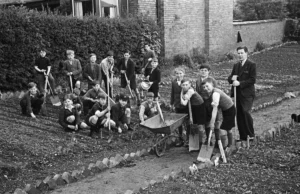
During World War II, the United States pushed civilians to plant Victory Gardens almost everywhere they could. These were not hobby plots for people with extra time. They were part of the home-front response to wartime pressure on food, labor, packaging, and transport. Victory Gardens appeared on farms, in backyards, on rooftops, in window boxes, on public land, and in vacant lots. By 1944, 18.5 million gardeners were taking part, and they supplied 40 percent of America’s fresh vegetables. By the end of the war, Americans had grown between 8 and 10 million tons of food in these gardens.
To understand just how big the movement became, Americans tended more than 20 million gardens during the war years, and the campaign was carefully organized rather than spontaneous. Federal agencies, seed companies, garden clubs, schools, and the media all pushed the same message: growing food at home was patriotic. Even public figures joined in the war effort. Eleanor Roosevelt planted at the White House. Cartoon characters and comic-book heroes were used to sell the idea to children and families. This was propaganda, yes, but it was also practical.

Britain Had Its Own Version: Dig for Victory

Britain was doing much the same thing under an even more direct slogan: Dig for Victory. The campaign began in October 1939 and urged people to use every spare piece of land, including gardens, parks, and even railway sidings, to grow food. An Imperial War Museums record for a 1941 Ministry of Agriculture film shows how broad that message became: allotments were shown on flat roofs and even on top of Anderson shelters. Its message was blunt and wartime-clear: food was as important a weapon as guns.
Why This Still Belongs in War History

In Chapman’s time, if planting meant orchards and settlement, in WWII, it meant tomatoes, beans, carrots, and cabbage grown by ordinary families so commercial agriculture and transport could serve the wider war effort. On the home front, a shovel could matter almost as much as a slogan.
War history usually focuses on beaches, bombers, ships, and tanks. It should. But wars are also sustained in quieter places—yards, allotments, rooftops, and vacant lots. So on March 11, Johnny Appleseed Day is more than a quirky calendar note. It is a reminder that in wartime, even planting a garden can become part of national defense.
If you enjoyed the article above, you may also like the following:
- “Carrots are good for night vision” started as a WW2 campaign
- How war survivalism helped deter the worst that could’ve happened to humanity