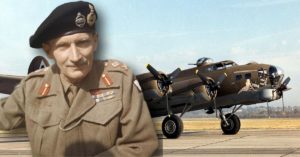
When you think of Dwight D. Eisenhower, there’s much that comes to mind: a military leader, President of the United States, Supreme Allied Commander, Chief of Staff of the Army, and even president of an Ivy League university. What probably doesn’t fall within that list is a man who lost a bet to a British Allied general.
Of all of Eisenhower’s storied accomplishments, that single bet stands out as perhaps the funniest loss of his career – it’s certainly a laugh-worthy moment in the midst of America’s history, and it all started with a single World War II victory.
It All Started with Montgomery’s Reputation
Although it sounds more funny than unusual that two military leaders would make a bet with each other, the one between Eisenhower and Lieutenant General Bernard L. Montgomery had more to do with the Lt. General’s reputation than a joke between friends.
In fact, the bet was rooted in events that happened long before Eisenhower and Montgomery settled their wager. By 1943, as the world faced the tumultuous events of World War II, Montgomery had earned himself quite a notorious reputation within the Allied military.
He was known as a man with no tact and limited diplomatic skill. According to the war diaries of Alan Brooke, the Chief of the Imperial General Staff and a supporter of Montgomery, the Lt. General was frequently reprimanded by his superiors because he handled situations with zero tact and an overbearing ego.
Montgomery was unconcerned with others’ feelings and tended to act without thinking of those around him.

Despite such an abrasive attitude, Montgomery continued to succeed in his military career. Montgomery was unpopular with the majority of his fellow soldiers and even his superiors – in fact, Winston Churchill himself described Montgomery as “In defeat, unbeatable; in victory, unbearable” – but it was well known that he was a skilled soldier and leader. Unlike so many British Army recruits during World War II, Montgomery had no social pedigree.
The son of a bishop from Tasmania, he stood out amongst the many other class-conscious officers. Quickly, the Army realized that Montgomery was strong-willed and incisive, able to inspire the men he trained and masterful in his objectives. History remembers him today as the soldier who modernized the British Army by reorganizing and training the Fifth and Twelfth Corps as well as the South-Eastern Army in the early years of the war.
It was his effectiveness and efficiency that propelled Montgomery to new military heights and also to new conflicts with increasing numbers of leaders. As the Allied Forces brought England and America together, so too did they bring Montgomery and Eisenhower together. In 1943, Eisenhower was the supreme Allied Commander in the Mediterranean and northern Europe – and this meant Montgomery fell under Eisenhower’s command.
The two men clashed almost immediately, and it was no surprise that the relationship between them was tense, teetering on the verge of a falling out at any moment.

Allied Success in Africa Gives Montgomery the Bet Victory
Even more telling of Montgomery’s attitude was his tendency to misbehave at inappropriate times – and it was this that led to the bet with Eisenhower. More accurately, Montgomery’s bet wasn’t even with Eisenhower himself; it was with a member of Eisenhower’s staff. The former president simply ended up paying the price for another’s silly joke.
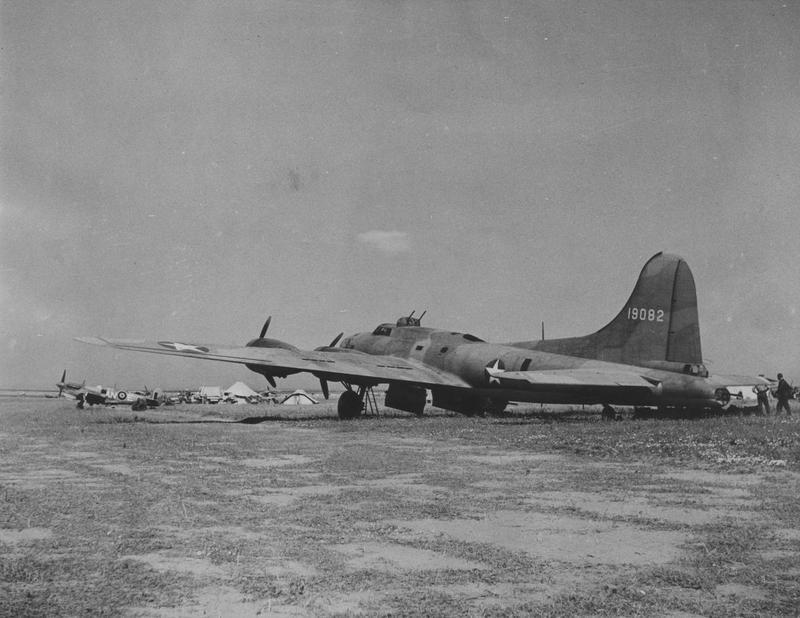
As the Allies conducted the North African campaign in 1943, Montgomery bet Walter Bedell Smith, Eisenhower’s chief of staff at Allied Forces Headquarters in Tunisia during the operation, that he could capture the city of Sfax by mid-April of that year. Smith replied with a joke: if Montgomery succeeded, Smith would give him a Flying Fortress and a crew to go with it. Weeks and months passed, and Smith forgot about his little joke.
Montgomery, however, wasn’t about to let Smith off the hook. On April 10th, Montgomery took control of Sfax, succeeding as he’d predicted. His immediate action upon achieving victory was to send Smith a message, in which he announced that he was ready to “claim his winnings” from Smith. Ever a good sport, Smith responded by laughing at Montgomery, reminding him that it was merely a joke. Montgomery didn’t find anything about the situation funny; he refused to drop the issue, or to accept that it was ‘just a joke.’ News of the joke and Montgomery’s determination to get what he believed he was owed reached Eisenhower’s ears – and Eisenhower was furious.
Eisenhower didn’t keep his anger towards Montgomery hidden. A few weeks after hearing about the bet and Montgomery’s insistence to hold Smith accountable, Eisenhower vented to Montgomery’s mentor, Alan Brooke, during a meeting. Brooke believed he could convince Montgomery to give up the bet and attempted to smooth the situation over with Eisenhower.
Shortly after that embarrassing meeting, Brooke met with Montgomery and admonished him about his “crass stupidity” – and although Montgomery apologized to Brooke, the entire situation grew even worse.

Fortunately for Montgomery, Eisenhower was a skilled diplomat who would never leave another party angry; Eisenhower saw that Montgomery did eventually receive his Flying Fortress. However, that plane came at a political cost for Montgomery.
Because his behavior infuriated Eisenhower, any positivity in the duo’s relationship was lost. Eisenhower couldn’t believe that Montgomery would selfishly accept the plane; the Allied troops desperately needed B-17s to bomb targets and succeed. The two men faced each other with ill feelings for the rest of their work together in the Allied forces.
In a somewhat ironic twist, Montgomery didn’t get to keep his “winnings” for very long. After all of the anger and ruined diplomatic relationships, Montgomery’s Flying Fortress experienced a crash landing. It was written off as too damaged to salvage, and the plane was never repaired or replaced.
All of Montgomery’s pushing, prodding, and demanding ultimately got him nowhere – what remains of his bet is the hilarious moment in history it left behind.