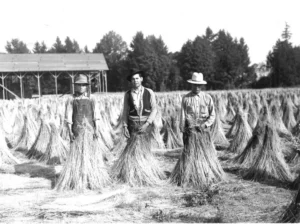
March 31, 2026, marks a somber turning point in American labor history. Traditionally observed as César Chávez Day, the date has been widely refocused this year as Farmworkers Day following a devastating New York Times investigation released earlier this month. The report detailed credible allegations against the late labor leader, including accounts from co-founder Dolores Huerta.

As the nation grapples with this shattered individual legacy, the focus has shifted away from the man and toward the movement itself—and the millions of workers whose struggle for dignity began long before the 1960s. To understand the true roots of this power, we must look back to 1942 and a wartime emergency measure known as the Bracero Program.
1942: A Nation at War, a Field in Crisis
Following the attack on Pearl Harbor, the U.S. faced a catastrophic labor shortage. With the domestic workforce diverted to the front lines and defense plants, the American food supply teetered on the brink.
In response, the U.S. and Mexican governments signed the Mexican Farm Labor Agreement on August 4, 1942. This launched the Bracero Program (from the Spanish brazo, meaning “arm”), a massive guest-worker initiative that brought more than 4.6 million Mexican citizens to labor in U.S. fields and on railroads over the next two decades.

The “Short-Handled Hoe” and Systemic Abuse
While the Braceros were essential to the Allied war effort—harvesting the crops that fed the “Arsenal of Democracy”—their reality was one of systemic exploitation. The program was built on a foundation of “captive labor,” where workers had no right to choose their employer or negotiate their contracts.
- Substandard Conditions: Many workers were subjected to toxic fumigation with DDT and housed in dilapidated shacks.
- Physical Toll: The mandatory use of el cortito—the 12-inch short-handled hoe—forced laborers to work in a permanent stoop, causing permanent spinal damage for a generation of men.
The Movement: A Collective Response to Injustice
The farmworker movement was never the product of a single individual; it was a collective reaction to the abuses of the Bracero era. Organizers like Dolores Huerta, Larry Itliong, and thousands of anonymous families recognized that the program was being used to keep wages low and break domestic strikes.
When the Bracero Program was finally terminated in 1964, it opened a door. The 1965 Delano Grape Strike, often cited as the movement’s birth, was actually led by Filipino American workers of the Agricultural Workers Organizing Committee (AWOC) before they joined forces with Mexican American organizers.
2026: Honoring the Struggle, Not the Symbol

In 2026, the reckoning over Chávez’s personal conduct has forced a long-overdue transition. Major cities from Los Angeles to Phoenix have begun removing his name from public spaces, choosing instead to honor the collective “Farmworkers” or individuals like Huerta.
The history of the Bracero Program reminds us that progress is won by the courage of the many, not the perfection of the one. As we observe this day, the focus remains on the millions of men and women who continue to toil in the fields to feed a nation—demanding the safety, dignity, and transparency that the movement’s original founders first fought for in the shadow of World War II.