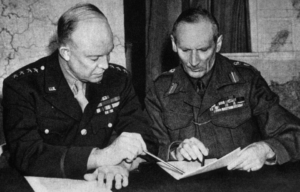
War is seldom associated with friendly bets, yet in 1943, General Dwight D. Eisenhower and General Bernard Montgomery reportedly made just such an arrangement. Eisenhower later honored the wager, providing Montgomery with a Boeing B-17 Flying Fortress, though he was said to be displeased that the British commander decided to claim it. The episode also drew irritation from another senior American officer, General George S. Patton, who was notably unimpressed with how events unfolded.
Bernard Montgomery in North Africa

It was 1942, and Bernard Montgomery was battling Generalfeldmarschall Erwin Rommel across the arid expanse of North Africa. While the Allied forces were pushing the German field marshal back, it was costing them dearly, in both men and resources.
To ensure Rommel was constantly on the back foot, Montgomery wanted more troops and equipment brought in. Other Allied countries shared this desire, as they wanted to secure North Africa. Doing so would enable them to comfortably and effectively launch the invasion of Italy.
Operation Lightfoot

This was the reasoning for Bernard Montgomery’s Operation Lightfoot. Launched late on October 23, 1942, it was designed to knock Erwin Rommel out of North Africa, once and for all. Months of deception had fooled the Germans, allowing the allies to keep where the operation would take place a secret. This was done through fake ammunition dumps, dummy tanks and supply trucks.
At 9:40 PM, an enormous 1,000-gun artillery barrage marked the beginning of the assault. Thousands of troops and hundreds of tanks advanced toward the Germans, causing them to retreat in a panic. Not long after the attack began, Operation Torch brought 73,000 Allied soldiers onto Africa’s northern shores to push the Germans east.
The Allies and Axis powers clashed, while George Patton and Montgomery raced each other to liberate cities and territories. They were making excellent progress, but Dwight D. Eisenhower wanted more. A couple of months into the offensive, he sent Maj. Gen. Walter Bedell Smith, his chief of staff, to visit the British general at his headquarters.
Betting a Boeing B-17 Flying Fortress

During a meeting in 1943, Bernard Montgomery asked whether he might receive a Boeing B-17 Flying Fortress to use as his personal transport aircraft. Walter Bedell Smith reportedly responded with a joking challenge, saying that if Montgomery could capture the Tunisian city of Sfax by April 15, 1943, the bomber would be his.
George Patton wasn’t happy about the bet

A total of 12,731 B-17 Flying Fortresses were produced during World War II, so Bernard Montgomery receiving one might not, at first glance, seem controversial. However, the decision reportedly caused friction among key Allied commanders.
Dwight D. Eisenhower was said to be displeased that Montgomery accepted the aircraft at all, given that bombers were in high demand and losses remained significant during the war. At the same time, George S. Patton was reportedly angered that an American general had provided Montgomery with a personal aircraft for transport, while he himself had to rely on whatever transport he could find while traveling between commands.
More from us: HMS Glowworm (H92) vs Admiral Hipper: A Daring Battle in the North Sea
However, none of this mattered in the end. The B-17 was damaged in a crash landing just a month after Montgomery received it, and Eisenhower didn’t replace it.