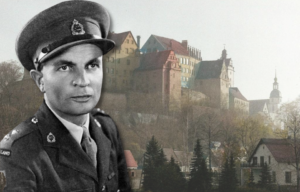
One of the harsh truths of war is that soldiers can fall into enemy hands. As prisoners of war (POWs), they may be held for the duration of the conflict—or, in some cases, face far grimmer outcomes. Even so, many have refused to accept captivity, choosing instead to risk everything on daring escape attempts rather than endure life behind fences and guard towers.
Escape from Libby Prison
On February 9, 1864, a determined group of 109 Union soldiers pulled off a remarkable escape from Libby Prison. Led by Thomas E. Rose and Andrew G. Hamilton, the prisoners spent months secretly carving out a tunnel using little more than chisels and a wooden spittoon. They endured infestations of rats in the basement and lived with the constant risk of discovery.
After 17 grueling days of digging, the tunnel was finally completed. Under the cover of darkness, the men made their escape, emerging inside Kerr’s Warehouse on Canal Street. Because Libby Prison was widely believed to be nearly impossible to escape, the fugitives were able to move through Richmond with surprisingly little suspicion.

E.H. Jones and C.W. Hill
Elias Henry Jones and Cedric Waters Hill were soldiers during World War I. Jones was a Welsh officer with the Indian Army and Hill an Australian officer with the Royal Flying Corps. The pair met while incarcerated at Yozgad prisoner of war camp in Turkey.
The pair wanted to escape their conditions and turned to society’s growing interest in the paranormal. Fashioning a Ouija board out of a polished iron sword and an upside-down jar, they convinced the camp’s commanders they were mediums. According to Hill and Jones, the camp’s resident ghost was named “Spook.”

The con went on for over a year, between February 1917 and the summer of ’18. They eventually convinced the guards they were insane and had themselves transferred to a hospital for the mentally ill. While there, they continued to play up their symptoms until they convinced the doctors to repatriate them back home.
Jones and Hill were set free just a few months before the Armistice put an end to the war.
Charles Upham
Charles Upham was a member of New Zealand’s Officer Cadet Training Unit (OCTU) during World War II, fighting numerous skirmishes against the Axis powers. During an assault against the Germans at Ruweisat Ridge in the Egyptian desert, he was injured twice, taking a bullet to the left arm and shrapnel to the leg.
Upham’s leg injury resulted in his capture. He was first transported to a hospital, where it was recommended his leg be amputated. However, not wanting to risk an agonizing death and with a desire to escape his captors, he declined.

Upham attempted numerous escapes during his time as a prisoner of war. While on a transport through Italy, he jumped off the truck and managed to make it 400 yards before being recaptured, despite having a broken ankle. Another incident in 1943 involved him getting tied up in a barbed-wire fence in broad daylight. Despite having a guard point a gun at his head, he stayed calm and lit a smoke.
From this point on, he was considered “dangerous” and forced into solitary confinement. He once attempted to escape this predicament by simply running out the front gates, but was eventually caught. Fed up with his antics, the Germans transported him to Colditz Castle, then a prisoner of war camp known as Oflag IV-C, in Saxony.
Upham waited out his sentence at Colditz, but did try one more escape. During transport in October 1944, he jumped out of a train window while the locomotive was at full speed. He landed on the track and fell unconscious, before waking up and hiding in a nearby orchard. Due to the lack of cover, the Germans eventually found him.
Davao Escape
Following the battles of Bataan and Corregidor during WWII, thousands of Allied troops were taken prisoner by the Imperial Japanese Army. Many were forced to endure the April 1942 Bataan Death March to Camp O’Donnell and transferred between camps. The poor conditions and the desire to continue fighting led to the Davao Escape. It would be the only large-scale Allied escape from the Japanese during the course of the war.

Whilst stuck in a labor camp in Mindanao, 11 American servicemen – Melvyn H. McCoy, William E. Dyess, Luis Morgan, Stephen M. Mellnik, Samuel C. Grashio, Austin C. Shofner, Jack Hawkins, Leo A. Boelens, Paul Marshall, Michiel Dobervich and Robert Spielman – and two Filipino men made their escape into the jungle.
They traveled through swamp and thick jungle and eventually came into contact with a band of guerrillas whom they joined for several months. They led raid parties with the directive of attacking Japanese soldiers.
In the fall of 1943, they were rescued by an American submarine and transported to Australia. Two of the American officers stayed behind to fight with the guerrillas and were later reunited with their countrymen.
Cho Chang-ho
Cho Chang-ho was a military officer serving with the Republic of Korea (ROK) Army during the Korean War. After the Battle of Han Seok Mountain in May 1951, he was captured by the Chinese Army and became a prisoner of war in North Korea. By the end of the conflict in 1953, he was one of an estimated 60,000 South Korean soldiers to be captured.

Chang-ho spent the next 43 years of his life in North Korea, the first 13 as a prisoner of war. In October 1994, he successfully escaped the heavily guarded nation. After crossing the Yalu River border into China, he was helped by fellow Koreans and given passage to South Korea’s western coast aboard a Chinese boat used to smuggle goods.
Both the government and Chang-ho’s family were surprised at his return, as they thought him dead. After acclimatizing back to civilian life, he spent his time advocating for the repatriation rights of prisoners of war. In 2006, he traveled to America, where he testified before the US House Committee on Foreign Affairs.