Military institutions operate within clearly defined hierarchies, with each rank carrying its own set of duties and authority. However, not all ranks endure over time. Evolving strategies, technological advancements, and shifting organizational demands have led to certain positions becoming obsolete and eventually disappearing from active use.
The sections that follow examine a range of these discontinued military ranks. By exploring these forgotten titles, it becomes possible to better understand past military practices, see how armed forces once functioned, and trace the evolution of rank structures across different eras.
Cornet

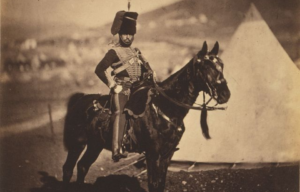
The rank of cornet in the British cavalry was the lowest commissioned officer rank, positioned below lieutenant and captain. Its name originated from the cornet, a trumpet-like instrument played by a musician in each cavalry unit, though the musician was not called “Cornet.”
This rank was abolished in 1871 as part of the Cardwell Reforms, with the second lieutenant taking its place. Other nations also used it, with one of the most famous being former British Prime Minister Winston Churchill, who served as a cornet in the 4th Queen’s Own Hussars.
Quartermaster sergeant

Within the U.S. military, the quartermaster sergeant served as a key logistical specialist, tasked with overseeing a regiment’s or battalion’s supplies under the supervision of the senior quartermaster. Their role included organizing camp layouts, issuing food and equipment, and maintaining detailed records of all materials and property. Although they were not typically engaged in frontline combat, they trained alongside other non-commissioned officers, remaining prepared to assume combat duties if needed.
The rank of quartermaster sergeant was discontinued in 1921 as part of a broad restructuring of the military’s command and logistics systems.
US Air Force chief warrant officers

Chief warrant officers are a common presence in many militaries worldwide, including the United States – although, the US Air Force had ceased using this rank after the retirement of its last “Chief Airman” in 1992. In branches that utilize warrant officers, these individuals attain their position based on their specialized expertise within their respective service.
The Air Force had discontinued the use of chief warrant officers in 1952, deeming them unnecessary for its operations. However, amid ongoing discussions among airmen, a persistent rumor suggested a potential return of the rank.
This was confirmed in February 2024, when Air Force Chief of Staff Gen. David W. Allvin announced the plan to reintroduce it, specifically for airmen in the cyber and information technology fields. This decision aims to enhance the branch’s readiness for challenges posed by “Great Power Competition.”
Commodore

The rank of Commodore holds a special place in naval history, usually falling between the ranks of captain and rear admiral. Its name goes back to the French word commandeur, used in knightly orders to denote someone with notable authority.
Over time, the title was used both as an honorary designation and as a formal military rank. When used as a title, it was often given to senior captains temporarily put in charge of multiple ships. As an official rank, commodores commanded squadrons and reported directly to admirals.
In the U.S. Navy, the rank fell out of use in the early 1900s, then brought back during the Second World War to help manage the growing number of officers. After the war, it was removed again. It made a short comeback in the 1980s, but the Navy ultimately replaced it with “rear admiral (lower half)” to avoid confusion with ceremonial or non-military uses of the title.
Sergeant major general

The rank of sergeant major general, which is no longer used, was once the lowest level of general. This rank often caused some confusion among enlisted soldiers because, even though a sergeant major general ranked below a lieutenant general, a major usually outranks a lieutenant—a fact that still seems a bit odd today.
Philip Skippon, a high-ranking officer in the New Model Army during the English Civil War, is the most famous person to have held this title. While some modern militias still use the rank occasionally, it has otherwise disappeared from today’s military structure.
Drum major

Within the United States Marine Band, the drum major once held an official rank, though that title has since been removed from the formal Marine Corps hierarchy. Nevertheless, the drum major remains essential, overseeing the band’s discipline, directing ceremonial performances, and coordinating its overall visual presentation.
Easily identifiable by their distinctive attire, drum majors don a tall bearskin hat and wield a ceremonial mace. More than a decorative accessory, the mace serves as a tool to lead the musicians, conveying commands and signaling movements during parades and official ceremonies. Today, the drum major endures as a powerful emblem of the Marine Band’s tradition, responsible for overseeing its precision and professionalism.
More from us: ‘Star Wars’ Almost Started a Real-Life War… Over a Sandcrawler Model
While the drum major role remains active, the official rank associated with it has been retired. Master Sergeant Steven Williams currently serves as the 41st Drum Major of “The President’s Own” U.S. Marine Band. Since joining the ensemble in May 2025, he has carried forward the legacy of guiding the band with meticulous precision and ceremonial distinction.