When people think of the American Revolutionary War, they typically picture fighting confined to North America. While that was largely the case, a handful of unusual operations took place far from the colonies—including one that reached the British mainland itself.
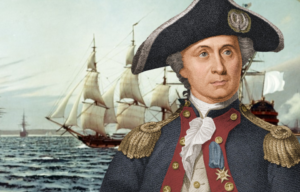
The most famous example is the 1778 raid on Whitehaven, led by John Paul Jones, often called “father of the American Navy.” Commanding a small landing party from his ship, Jones attempted to ignite vessels in the harbor and disable the town’s coastal defenses. Although the physical damage was limited, the raid carried considerable symbolic weight, as it remains the only attack of the war to strike British soil.
John Paul Jones planned the daring feat

Continental Navy Capt. John Paul Jones had made quite the name for himself during the American Revolution and, by 1778, he wanted to stage a daring assault on British soil. Previously, he’d been operating out of France, moving up and down the English Channel, trying where he could to disrupt the British and help the conflict being fought across the Atlantic.
Venturing into the Irish Sea, in the hopes of inflicting damage against merchant shipping, Jones concocted a plan to attack the British on their own doorstep. This was something that, had it been launched from America, would have been impossible, due largely to the vast distance between the nation and Britain.
Might of the British Royal Navy

Another aspect that would have made this feat appear impossible: the might of the British Royal Navy.
At the time, the Royal Navy was unrivaled in power and was capable of decimating any naval force brave enough to face its sailors head-on. For this reason, John Paul Jones’ crew and other American ships adopted the tactic of harassment, striking supply lines and merchant shipping where possible.
Jones was aware of the Royal Navy’s strength and wanted to strike with the element of surprise. He was to strike at the port of Whitehaven, on the coast of Cumbria. The plan was to anchor his ship, the USS Ranger (1777), out at sea and head into port at night with 30 volunteers in two dinghies. One crew would attack a British fort guarding the harbor, while the other team would sabotage the town and set the 200 ships in the harbor on fire.
Finally, the British would feel the heat of Revolutionary War on their own turf.
Why Whitehaven?

Why Whitehaven? Was it strategically important? Not at all. John Paul Jones had only chosen it because he was born and raised in Scotland and had began his sailing career from the Cumbrian port. He, therefore, had intimate knowledge of its layout, which meant navigating the area in the darkness of night would be easier than another, less familiar location.
Jones’ career started at the young age of 13, with him becoming the captain of a merchant vessel at just 21, after his predecessor suddenly died from yellow fever, leaving the young man to navigate the ship back.
After commanding the vessel for a while, Jones’ reputation took a turn for the worse when he flogged a member of his crew so severely that the man died a few weeks later, causing him to be seen as overly cruel. Jones left Scotland after this, captaining another vessel in Tobago for over a year before killing yet another member of his crew after a dispute. Fleeing the potential legal repercussions, he relocated to Virginia and changed his name.
John Paul Jones launches his attack on the British

Off the coast of Whitehaven, the USS Ranger‘s anchor was dropped, and the two crews set off for the port at just after midnight on April 23, 1778.
Immediately, they faced a strong wind and tides, slowing their journey significantly. Upon arrival, John Paul Jones’ team made their way to the fort, successfully and quickly silencing its cannons. Jones, however, had difficulty starting any fires; the fuel for their torches had run out on the unexpectedly long journey to shore.
Exiting the fort, the captain was greeted with a very noticeable lack of burning vessels in the harbor. Meanwhile, the other crew had also run out of fuel, forcing them to find their own in Whitehaven. On this hunt, they’d conveniently entered a public house and got caught up in more important matters – namely, having a drink!
By the time Jones had linked up with and rallied his men, they were drunk, and the sun was coming up, forcing them to abandon the goal of burning the entire port to the ground, in exchange for claiming a single coal ship that they hoped would spread flames to the other moored boats when ignited.
A traitor makes the situation worse

As the raid progressed, John Paul Jones saw his plans undermined by a member of his own crew, who rushed through Whitehaven to warn the townspeople. Later inquiries suggested the man had joined the Continental Navy largely as a means of securing passage back home.
Even with the alarm raised, Jones’s party succeeded in setting fire to a large coal ship in the harbor, but townspeople quickly responded and extinguished the blaze. Realizing the operation would not succeed, Jones ordered a withdrawal, and his men returned to their boats before making their way back to the USS Ranger under cover of darkness, aware that their mission had fallen short of its intended goals.
John Paul Jones puts another (failed) plan into action

For a man like John Paul Jones, this failure was unbearable, so he set sail for Scotland, hoping to kidnap the wealthy Earl of Selkirk, to use him as a bargaining tool to retrieve captured Americans from the British.
Gathering yet another crew, he rushed ashore, entering the stately home of the earl. With another stroke of bad luck, Jones found he was in London. Exhausted, deflated and suffering yet another defeat, the crew opted to steal the man’s silverware.
Despite the total and utter failure of both of Jones’ plans, which nearly resulted in a mutiny, the attack did ruffle some feathers in Britain, which had previously insisted the mainland was safe from an American attack. It was the only one to occur on British soil and, unlike the situation in North America, it didn’t end in the Americans’ favor.
Jones would later go on to be remembered very differently in the two countries: as a hero in the United States and a working-class pirate in Britain.