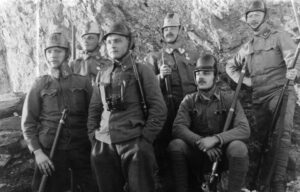
One year into World War I, a Hungarian soldier named Paul Kern suffered a gunshot wound to the head from a Russian bullet. Under normal circumstances such an injury would have been fatal, yet Kern survived and eventually recovered. Remarkably, the wound did not take away his hearing or eyesight—but it did leave him unable to sleep.
For the next four decades, Kern’s case baffled physicians, who struggled to explain how he could continue living despite reportedly losing the ability to sleep.
Paul Kern

Paul Kern was a Hungarian soldier serving on the frontlines during World War I. He enlisted after the death of Archduke, Franz Ferdinand and became part of Hungary’s elite shock troops, units tasked with leading assaults against enemy positions.
Kern never slept again
Kern left the military soon after and returned to civilian life. Not only had he lost the ability to sleep, but he had also lost any desire to sleep. Without it, his days were eight hours longer than usual, both a blessing and a curse.
To begin with, Kern tried to force himself to sleep but found this more tiring than simply staying awake.
Sleep is extremely important to maintain a healthy body, both physically and mentally. While asleep, your body rebuilds and restores vital systems including the brain, which is thought to be the main priority for restoration while asleep. Sleep also has a massive effect on a person’s cognitive state. A lack of sleep can take a heavy toll on the body’s health, and even induce hallucinations and entire changes in personality.
It is so important that an extreme lack of sleep is believed to be fatal.
For Kern though, none of this was a problem, which is one of the reasons his case is so extraordinary. In fact, it was the practical issue of being awake for 24 hours a day that Kern was most unhappy about. Kern was able to live a mostly normal life without ever going to sleep, and had no obvious detrimental effects. He spent his extra time reading and seeing his loved ones.
For about an hour each day, Kern would close his eyes to rest his optic nerves, something he had to do otherwise he would have headaches.
Naturally, many doctors were skeptical about Kern’s claims, but he traveled around the world to whatever doctor wanted to examine him, puzzling them all.
One theory proposed was that he was having microsleeps throughout that day, that even Kern wasn’t aware of. However, Kern was never observed to be in any state other than completely awake.
More From Us: Weird Ways To End A Siege — Some Strange Strategies
Another idea was that the Russian bullet removed a specific part of the brain that required sleep. Regardless, most of the doctors believed that you can’t get something for free, in this case, Kern’s body functioning without recovery they believed would lead to an early death.
They were partly correct, as he would pass away in 1955 at a relatively young age. However, Kern had lived through the past 40 years without sleep, making it a truly remarkable case. He may have died earlier than expected but he also gained an additional eight waking hours every single day for 40 years.