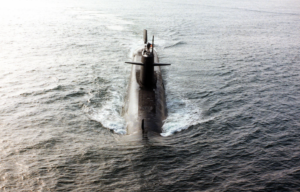
Submarines stand as some of the most intricate feats of modern engineering, designed to remain submerged and undetected for weeks or even months at a stretch. Life aboard them confines sailors to tight steel passageways, removed from sunlight and the normal cadence of life on the surface.
Daily life revolves around rotating 18-hour shifts, shared bunks, and carefully regimented routines, leaving little personal space. Yet, this close-quarters existence forges a deep camaraderie among crew members. Operating under constant stress and isolation demands discipline, mental toughness, and complete trust, creating a remarkable unity that defines service beneath the waves in one of the planet’s most challenging environments.
Overview of how submarines have developed over the years

Nuclear-powered submarines integrate nuclear storehouses, launch platforms and weaponry to present an elusive and formidable package. Before the New Strategic Arms Reduction Treaty (START), the US Navy’s 14 Ohio-class ballistic missile submarines were armed with 24 submarine-launched ballistic missiles, each carrying multiple warheads. As per the treaty, each is now limited to a maximum of 20.
Typically, submarines embark on 77-day sea patrols, equipped with a 90-day food supply, before returning to port for just over a month. The Navy’s ballistic missile submarines operate with two alternating crews – Blue and Gold – maximizing their operational efficiency and minimizing the number of vessels deployed.
The inaugural combat submarine, designed during the American Revolution, was the Turtle. This roughly eight-foot spherical vessel held a single individual and was manually powered. Shortly after her development, Turtle executed the world’s first submarine attack by stealthily navigating underwater, penetrating the HMS Eagle (1774) and installing explosives in her hull.
In contemporary times, submarines like the Ohio-class boast an impressive length of 560 feet and a weight exceeding 18,750 tons when submerged. The Navy’s submarine fleet comprises 53 fast-attack submarines, 14 ballistic missile submarines (holding more than half of the American nuclear arsenal) and four guided-missile submarines.
Personnel stationed on these submarines undergo rigorous training, including exercises like Ice Exercise (ICEX) 2022, preparing them to navigate complex and potentially perilous environments. Such training is crucial given the uncertainties associated with serving beneath the ocean’s surface.
What is downtime like inside a submarine?

Dealing with deadly weapons onboard the vessel

Taking care of weapons is one of the most important responsibilities for submariners. Although submarines often focus on patrol and surveillance, their missile systems are a vital part of military operations. To stay prepared, the crew must regularly check and maintain their weapons and other equipment so everything is ready to go at a moment’s notice.
The U.S. Navy plans to expand its fleet by adding up to three Virginia-class fast-attack submarines each year through 2043. Still, some experts—like former Submarine Forces Commander Vice Adm. Michael Connor—say that won’t be enough. He believes the Navy needs 66 more submarines to meet the rising need for strong underwater military power.
Looking ahead, the Navy is also working on replacing its aging Ohio-class submarines with the new Columbia-class. The first of these advanced submarines is expected to join the fleet by 2031.
Submarines play a critical role in deep-sea rescue

Life inside a submarine means dealing with navigational challenges

Despite seeming complex, steering a submarine is relatively simple—even though the person at the helm can’t actually see where they’re going. Instead of vision, submarines depend on sonar to identify nearby objects and hazards in the water. They’re also equipped with an inertial navigation system (INS), which tracks the sub’s position by measuring its motion over time.
Because GPS and radio waves don’t penetrate water, the INS plays a crucial role in navigation while helping the submarine remain undetectable to adversaries. This high-tech system uses gyroscopes and accelerometers to determine speed and direction.
One of the most iconic pieces of submarine equipment is the periscope. This tall, narrow instrument allows the crew to observe the surface while staying hidden beneath the waves. Some models can extend as high as 60 feet!
Has much has changed over the years?

When comparing older submarines to their modern counterparts, it’s striking how similar they are, especially when looking at those used during World War I and II. Though these early subs were slower and couldn’t stay submerged for as long as today’s vessels, they still played a crucial role in reconnaissance and providing support at sea.
The most significant leap in submarine technology came after the war with the introduction of nuclear-powered submarines in 1954. Unlike their diesel-powered predecessors, these nuclear submarines marked the dawn of a new era. Their ability to remain submerged indefinitely, thanks to nuclear power, made them the first true submarines in terms of endurance and operational capabilities.