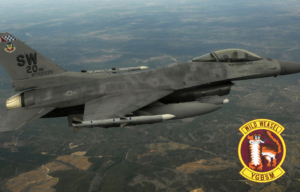
Photo Credit: 1. Staff Sgt. Sarayuth Pinthong / United States Air Force / Wikimedia Commons / Public Domain 2. United States Air Force / National Museum of the United States Air Force / Wikimedia Commons / Public Domain
Sometimes a few words can capture the essence of an entire unit, and the unofficial motto of the U.S. Air Force’s Wild Weasel crews does just that. YGBSM—short for You’ve gotta be sh****’ me!—perfectly reflects the extreme danger and intense pressure of their missions. Considering the hazards these pilots faced, it’s easy to see why this blunt, irreverent phrase became the defining expression of their fearless and audacious spirit.
McDonnell Douglas F-4G Phantom II shows its undercarriage holding four different missiles: AGM-45, AGM-65, AGM-78 and AGM-88. (Photo Credit: United States Air Force / Wikimedia Commons / Public Domain)
The term Wild Weasel refers to U.S. Air Force aircraft equipped with anti-radiation missiles, specifically designed to locate and neutralize enemy radar installations and surface-to-air missile (SAM) sites. These missions are considered among the most perilous in modern aerial combat.
The program began during the Vietnam War in response to increasingly sophisticated North Vietnamese air defenses. Known officially as Project Wild Weasel, it was initiated in the summer of 1965 and became operational that August. Over the next two years, volunteer Air Force and Navy crews tested these radar-hunting planes and honed tactics that laid the groundwork for contemporary methods of suppressing enemy air defenses.
Republic F-105 Thunderchief carrying an AGM-45 Shrike anti-radiation missile. (Photo Credit: United States Air Force / Wikimedia Commons / Public Domain)
During the Vietnam War, Wild Weasel crews developed an aggressive approach called the “Hunter-Killer” tactic. Flying Republic F-105 Thunderchiefs, or “Thuds,” they searched for enemy air defense positions and coordinated their missions with conventional strike aircraft, including the McDonnell Douglas F-4E Phantom II. After the Wild Weasels detected hostile radar emissions, the Phantoms moved in to destroy any remaining air defense threats.
Wild Weasel crews also deliberately exposed themselves to enemy fire to protect incoming strike packages. F-105 pilots would provoke surface-to-air missile (SAM) launches, using the missiles’ smoke trails to pinpoint otherwise concealed air defense sites. By remaining over heavily defended areas, they were able to draw out SAM batteries while also locating additional dangers, such as enemy fighters, concentrated anti-aircraft artillery, and hidden missile positions.
A weasel, nicknamed Willie, features prominently in many official and unofficial Wild Weasel patches and logos. (Photo Credit: United States Air Force / National Museum of the United States Air Force / Wikimedia Commons / Public Domain)
The unofficial motto of “YGBSM” came from Boeing B-52 Stratofortress Electronic Warfare Officer Jack Donovan. When Donavan was introduced to the tactics and mission details, he replied, “You want me to fly in the back of a little tiny fighter aircraft with a crazy fighter pilot who think he’s invincible, hone in on a SAM site in North Vietnam, and shoot it before it shoots me? You gotta be ******** me!”
Donovan’s reaction encompasses the danger surrounding the Wild Weasels, so it’s no surprise it stuck around as the unofficial motto! Today, Wild Weasel missions are performed by specially-trained General Dynamics F-16J Fighting Falcon crews. They continue to carry on the dangerous tradition and motto established by the F-105s in combat over Northern Vietnam throughout the 1960s and ’70s.