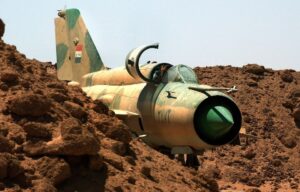
Hidden beneath the ever-changing sands of former battlefields lie the remains of many past wars, but uncovering a Mikoyan-Gurevich MiG-25 is an especially rare find. Known by the NATO reporting name “Foxbat,” the Soviet-built interceptor was created with one goal in mind: unmatched speed. Capable of outrunning almost every modern opponent, the MiG-25 became a dominant presence at high altitudes during the Cold War and was operated not only by the Soviet Union, but also by countries including Iraq, Syria, India, and Algeria.
The MiG-25RB, designated “Foxbat-B,” combined reconnaissance duties with a secondary bombing role. Built for long-range intelligence missions, it was also capable of carrying as many as eight 500-kilogram bombs, allowing it to conduct high-speed strike operations when required. This unusual blend of speed, flexibility, and offensive capability earned the MiG-25RB recognition as one of the most formidable aircraft of its era.

This is the same interceptor pictured above. U.S. forces discovered it early in the Iraq War, digging it out from deep beneath the ground at Al Taqaddum Air Base in Iraq’s western desert in April 2003.
Intelligence had suggested that equipment was buried in the area, but the discovery of the aircraft still came as a surprise. Former Defense Secretary Donald Rumsfeld put it, “We’d heard a great many things had been buried, but we had not known where they were, and we’d been operating in that immediate vicinity for weeks and weeks and weeks… 12, 13 weeks, and didn’t know they were [there].”

More from us: US Naval Aviators Once Complained That NASA Pilots Were Bullying Them
The decision to bury the jets reflected a desperate attempt to save them from near-certain destruction. Prior to the 2003 invasion, Iraq possessed one of the largest air forces in the region, complete with modern fighters, fortified hangars, and advanced maintenance facilities. However, once coalition aircraft achieved near-total air supremacy, Iraqi leaders realized their planes could not survive in open combat. Concealing the jets beneath the desert sands became a last-resort strategy to preserve at least part of the fleet, highlighting the extreme measures taken when facing overwhelming aerial dominance.