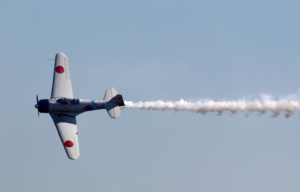
December 7, 1941, is known for Japan’s attack on Pearl Harbor, but it also marked the beginning of the Ni’ihau Incident. This event involved a Japanese fighter pilot, Shigenori Nishikaichi, and the residents of Ni’ihau, a small Hawaiian island. It led to a violent confrontation that left two people dead. Despite its significance, the incident is rarely talked about when people discuss the “day of infamy.”
Shigenori Nishikaichi crash-lands on Ni’ihau

When planning the attack on Pearl Harbor, the Imperial Japanese Navy (IJN) knew that many of its aircraft would be damaged; they wouldn’t be able to safely return to their aircraft carriers and, as such, would need a rendezvous point. The tiny island of Ni’ihau was chosen, as it was only a 30-minute flight from the naval base and was believed to be uninhabited. There, the fighter pilots could await rescue via submarine.
This plan didn’t work as well as expected for Shigenori Nishikaichi when his Mitsubishi A6M2 Zero was damaged. The fighter hit a fence on Ni’ihau, before crashing and damaging its propellers and fuselage. The wreck came to a rest very close to one of the few inhabitants of the island, 29-year-old Hawila Kaleohano.
Kaleohano, along with other inhabitants, hadn’t heard of the attack at Pearl Harbor. He identified the crashed Zero as Japanese and was able to drag the semi-conscious man from the wreckage. He took Nishikaichi’s weapon and documents before the pilot regained consciousness.
Interacting with Ni’ihau’s inhabitants

Hawila Kaleohano and Shigenori Nishikaichi spoke briefly because Kaleohano only knew Hawaiian. To help with communication, Kaleohano called his neighbor, Ishimatsu Shintani, a Japanese beekeeper who was able to talk with Nishikaichi. However, after saying just a few words, Shintani refused to continue the conversation.
Because of this, Yoshio and Irene Harada, who were of Japanese descent and fluent in Japanese, were brought in to talk to the pilot. Nishikaichi told them about Japan’s attack on Pearl Harbor, but they decided to keep this information to themselves. When he demanded his weapon and papers back, they refused to give them to him.
Learning about the Japanese attack on Pearl Harbor

At this point, the inhabitants of Ni’ihau were in high spirits and happy to help the downed aviator. They treated him to a luau, ate well and even sang songs while he waited to be rescued. However, the submarines didn’t come as planned, as they’d been ordered to patrol for American ships, instead.
As night fell, the mood turned as news of the day’s events arrived on the island. Ni’ihau didn’t have electricity, but it did have a battery-powered radio. The transmission brought news of the attack and the islanders realized they’d helped an enemy fighter.
Ni’ihau’s residents provided shelter overnight and took Shigenori Nishikaichi to the shore in the morning. There, they awaited the arrival of the island’s owner, Aylmer Robinson, who came each week. Robinson, however, didn’t arrive, given a temporary ban on sea travel.
After he failed to arrive, the Haradas offered to house Nishikaichi. The rest of the inhabitants agreed, so long as others could be stationed outside of the couple’s residence. These guards would take shifts, to ensure someone was always on watch.
Shigenori Nishikaichi took advantage of the Harada family

In the seclusion of the Harada household, Shigenori Nishikaichi was able to exploit the family’s strong sense of obligation. Over time, he earned Yoshio Harada’s trust and, to some extent, that of Yoshio’s wife. The couple ultimately agreed to help him and, on December 11, 1941, brought Ishimatsu Shintani back into the situation.
The following day, Shintani went to see Hawila Kaleohano and requested the pilot’s documents and firearm. Kaleohano refused to hand them over and forcibly removed Shintani from his home. Recognizing that Shintani could no longer be relied upon, Yoshio and Nishikaichi chose to move forward with a plan of their own.
While Shintani was occupied with Kaleohano, Yoshio succeeded in stealing both a shotgun and a pistol. After readying the weapons, he hid them in a building used to store honey. The two men then subdued the island resident assigned to guard duty and made their way to Kaleohano’s house. Once inside, they searched for the documents but learned that Kaleohano had already passed them to a relative. Kaleohano himself could not be found.
Seeking help from the island’s owners

As the pair left the building, Hawila Kaleohano, who’d been hiding in the outhouse, made a run for it. Shigenori Nishikaichi aimed with the shotgun and fired at the fleeing man, but missed.
Kaleohano met with other islanders and gathered a few of them to accompany him to Kaua’i. The 10-hour boat trip took them to representatives of the island’s owners. The group set out while someone lit a beacon atop Mount Pānī’au, which was visible from Kaua’i.
Chaos ensues on Ni’ihau

On the night of December 12, 1941, everything came to a head. Shigenori Nishikaichi and Yoshio Harada stormed the town and took hostages. They demanded Hawila Kaleohano be handed over or else everyone would be killed.
One man who pretended to look for Kaleohano was Benehakaka Kanahele, whose wife was one of the hostages. After stalling and pretending to look for the man, he urged Harada to take the pilot’s pistol. He refused, but did ask Nishikaichi for the shotgun.
As the aviator started to hand the gun over, Kanahele lunged at him. Nishikaichi was faster and pulled the pistol from his boot, shooting the man three times. This wasn’t enough to stop the enraged Kanahele, who hoisted Nishikaichi into the air and threw him against a stone wall. Kanahele’s wife grabbed a rock and bashed the pilot’s head, before her husband pulled a knife and cut his throat. Seeing this, Harada turned the shotgun on himself and took his own life.
Aylmer Robinson and reinforcements from Kaua’i arrived the next day and arrested Ishimatsu Shintani and Irene Harada. The latter was imprisoned for her role, while the former was interned in a camp.
More from us: Husband E. Kimmel: The Scapegoat for Pearl Harbor
Kanahele recovered from his wounds and received the Purple Heart, two Presidential Citations and Medal for Merit. Kaleohano was presented the Medal of Freedom in 1946, for his actions during the incident.