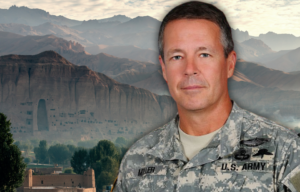
General Austin Miller was born to lead

Austin Miller was born in Honolulu, Hawaii, on May 15, 1961. After graduating from the US Military Academy at West Point in 1983, he was commissioned as a second lieutenant. Following his completion of the US Army Ranger School, he was assigned to the 3rd Battalion, 325th Infantry (Airborne), 82nd Airborne Division.
In 1986, Miller assumed the role of platoon leader with A Company, 2nd Ranger Battalion, 75th Ranger Regiment. After finishing the Infantry Officer Advanced Course in 1989, he served as a company commander in the 5th Battalion, 20th Infantry (Mechanized), 2nd Infantry Division, Eighth Army, deployed to South Korea.
In 1992, Miller was selected to join the 1st Special Forces Operational Detachment Delta (Delta Force), where he demonstrated exceptional leadership, progressing from squadron operations officer to unit commanding officer. Throughout this period, he participated in various operations, including missions in Somalia, Bosnia, Afghanistan and Iraq.
By 2007, Miller had attained the rank of colonel and held esteemed roles, such as director of the Interagency Task Force at US Special Operations Command, MacDill Air Force Base, Florida. Serving as the commanding general of the Combined Forces Special Operations Component Command in Afghanistan from 2013 to 2014, he oversaw special operations forces.
From 2016 to 2018, he commanded the Joint Special Operations Command.
Becoming US and NATO commander

In February 2020, the United States and the Taliban reached an agreement to withdraw 13,000 American troops from Afghanistan by May 1, 2021, on the condition that the Taliban would take action against Al-Qaeda and other terrorist groups. In return, the U.S. agreed to release 5,000 Taliban prisoners.
Even with ongoing Taliban attacks on Afghan government forces and their continued ties to Al-Qaeda, the withdrawal moved forward as planned.
In 2018, Austin Miller took command of U.S. Forces – Afghanistan and NATO’s Resolute Support Mission, succeeding Gen. John W. Nicholson Jr. Upon taking command, Miller stressed the mission’s global significance, stating, “The world recognizes we cannot fail.”
Shortly after stepping into his role, Miller was at the governor’s compound in southern Kandahar when a Taliban gunman carried out an attack targeting provincial police chief Abdul Raziq. Brig. Gen. Jeffrey Smiley was among those wounded in the assault.
Miller immediately ensured that medical assistance was provided and personally accompanied the wounded during their evacuation.
History of America’s longest war

General Austin Miller held the line

The first decade of the war was incredibly costly. Some 1,800 US troops died and $444 billion was spent on the war effort. By 2018, President Donald Trump outlined a new policy that would ultimately lead to an escalation between Taliban and American forces.
When the Trump Administration excluded Kabul from peace talks with the Taliban in late 2018, Austin Miller was put in a difficult position, which Jason Campbell, a policy researcher at Rand Corporation, said put the commander “in react mode very early on in his time in command.” He added, “Everyone was operating under some level of uncertainty as to what the White House was going to decide or state publicly next.”
After on-and-off peace talks between the US and Taliban, Trump announced the withdrawal of American troops from Afghanistan in 2020. Behind the scenes, Miller was working to convince the president not to pull out all troops, urging him to be “more patient and careful.” Miller was known for being an expert negotiator, bringing a “calm diplomatic demeanor” to the table while still remaining a strong presence in front of Taliban officials.
“He consistently pressed the Taliban to reduce violence and made clear to them that the US would continue to defend Afghan security forces if necessary,” an unnamed US official said. The official added that Miller “called it like it was when it came to levels of violence, going toe-to-toe with the Taliban in a way that we weren’t seeing from other US diplomatic officials.”
Under Miller’s command, the goings on behind US military doors became increasingly harder to discern. Journalists had more restricted access to NATO troops, officers and locations due to Miller’s heavy restrictions. Unlike his predecessor, he didn’t use the official NATO commander Twitter account, and also stopped publishing monthly statistics on airstrikes in Afghanistan.
General Austin Miller oversaw the complicated withdrawal

The final phase of the U.S. withdrawal from Afghanistan descended into turmoil and tragedy. Kabul fell to the Taliban with alarming speed, toppling the Afghan government almost overnight. Amid the chaos, U.S. and coalition forces rushed to evacuate diplomats, citizens, and at-risk Afghans, while thousands of desperate civilians surged toward Kabul International Airport in a frantic bid to flee.
That desperation erupted in disaster on August 26, 2021, when an ISIS-K suicide bomber struck Abbey Gate, a key airport checkpoint. The attack killed 13 U.S. service members—all Marines—and roughly 170 Afghan civilians. In a single moment, the airport became a symbol of both hope and devastation, highlighting the devastating human cost of concluding a war that had spanned a generation.
More from us: Downing of Extortion 17: The Single Deadliest Incident of the US War in Afghanistan
On July 12, 2021, General Austin Miller formally lowered the flag of Operation Resolute Support, signaling the conclusion of his tenure as the last U.S. commander in Afghanistan. While the ceremony was understated, its meaning was profound: it represented the close of nearly twenty years of American military engagement in a country where generations of service members had fought, endured extreme hardships, and made the ultimate sacrifice.
Just weeks later, the final withdrawal was complete, bringing the United States’ longest war to a close. Miller’s parting words lingered as both farewell and testament: “The people of Afghanistan will be in my heart, and on my mind, for the rest of my life.” His reflection spoke not only for himself, but for countless others who had lived the mission day by day, forming bonds that would endure long after the last flag was folded.