Origins of Project Stargate

Project Stargate was a multimillion-dollar program launched by the CIA at the height of the Cold War, to try and get ahead of the Soviet Union on powers of the mind. It was the result of rumors about the Soviets that were swirling around in the 1970s; the CIA believed the USSR was spending 60 million roubles annually on ESP and mind-reading projects, to aid in its espionage efforts.
It’s unclear whether or not the Soviet Union was actually working on ESP projects. What is clear, however, is that the CIA believed the country was and moved to create an American version.
What did Project Stargate entail?

Project Stargate investigated a range of unusual abilities, including reading others’ thoughts, telepathy, predicting future events, and “remote viewing”—the supposed capacity to observe distant places or moments in time without being physically present.

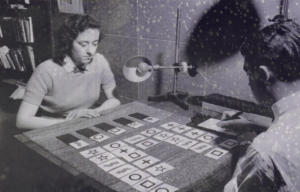
Remote viewing research and testing quickly got underway in 1972 at the Stanford Research Institute (SRI) at California’s Menlo Park. Parapsychologists Russell Targ and Harold Puthoff began testing people they deemed “gifted individuals” and psychics.
One of the best-known individuals examined in this first phase of Project Stargate was celebrity psychic Uri Geller. Known for his ability to bend spoons, the CIA recruited him because of his purported psychic abilities. For eight days in August 1973, Geller was locked in a room while the officials performed various experiments on him to test his supernatural abilities.
These tests measured Geller’s ability to “see” hidden drawings, find buried metal and bend spoons with his mind. As a result of his “success” during this period, the CIA concluded Geller had demonstrated his “paranormal perceptual ability in a convincing and ambiguous manner.”
As it turns out, Uri Geller was a fraud

The apparent success of the experiments performed on Uri Geller garnered interest from the Department of Defense. However, after the initial tests by the CIA, University of Oregon psychology professor Ray Hyman was asked to visit the Stanford Research Institute and personally evaluate the purported psychic.
After meeting with and evaluating him, Hyman concluded Geller was a fraud. He easily spotted loopholes and inconsistencies in Geller’s acts that Russell Targ and Harold Puthoff had apparently missed.
Moving Project Stargate to Fort Meade, Maryland

In the late 1970s, the CIA shut down work its work on ESP, and Program Stargate was moved from California to Fort Meade, Maryland. While initial trials in the 1970s weren’t necessarily promising and totally inconsistent, the initiative continued to receive funding from the US Congress.
In 1979, during a discussion of remote viewing in the House Permanent Select Committee on Intelligence, Rep. Charle Rose stated that the program “seemed like a hell of a cheap radar system. And if the Russians have it and we don’t, we’re in serious trouble.”
Operation Grill Flame

By far the most successful case within Project Stargate was one that occurred during Operation Grill Flame, when a young woman named Rosemary Smith tried to locate a Soviet aircraft that had crashed in the Democratic Republic of Congo (then Zaire). Smith was provided with a map and marked a very specific spot where she perceived the aircraft might have gone down.
Map technicians then converted her notations into geographical coordinates, which were sent to the CIA station chief in Zaire. Two days later, the Soviet aircraft was discovered where Smith said it would be, allowing the agency to extract valuable enemy technology.
‘Remote viewer no. 1’

The program continued to recruit remote viewers after the success with Rosemary Smith. One notable recruit was US Army veteran Joseph McMoneagle, who became known as “remote viewer no. 1.”
McMoneagle worked with Project Stargate from 1978-84 and was involved in 450 missions. He specialized in near-death experiences, out-of-body travel and unidentified flying objects (UFOs). A typical day of work meant being presented with envelopes and being asked to supply information about whatever was inside.
One of the most bizarre experiments McMoneagle was involved in was a “trip to Mars.” During the 1984 experiment, he was given a sealed envelope containing the information about “the planet Mars,” the time of interest being “one million years B.C.” Without knowing the contents, he reported seeing very large, thin people dressed in “some kind of strange clothes,” as well as obelisks and pyramids. When he learned what the envelope contained, McMoneagle believed he’d genuinely traveled back in time to Mars.
Cancellation of Project Stargate

Project Stargate was transferred back to the CIA in 1995, and a report was commissioned from the American Institutes for Research (AIR). It concluded that remote viewing hadn’t been proven to work and shouldn’t be used operationally.
As a result, the program was cancelled.
In 2017, the CIA declassified 12 million pages of records that detail previously unknown aspects of Project Stargate. The program was also featured (although not by name) in the 2004 Jon Ronson book, The Men Who Stare at Goats.
Core beliefs remain popular among society

While Project Stargate was created to help with Cold War espionage, its practices remain popular in modern American society. Roughly six in 10 American adults believe in at least one “New Age” belief – this refers to reincarnation, astrology, psychics and the presence of spiritual energy.
More from us: Tököl Airbase Played a Major Role in Germany’s War Machine – That Is, Until the Soviets Took It Over
This means that, while Project Stargate may have flamed out, its core beliefs remain popular.