While James Bond exists only in the fictional world created by Ian Fleming, history has produced intelligence operatives whose activities were every bit as complex. Some served as double agents or even triple agents, working behind the scenes to pass highly sensitive information to governments other than the ones they officially represented.
Oleg Penkovsky

Oleg Penkovsky was a senior Soviet military intelligence officer who played a major role in the Cuban Missile Crisis in 1962. Given the quality of information he passed on, he was one of the West’s most valuable double agents.
After World War II, Penkovsky was transferred from the Red Army to the Main Intelligence Directorate (GRU). After attending the Military Diplomatic Academy, he became an intelligence officer and was primarily stationed in Moscow.
By 1960, Penkovsky was a colonel in GRU and the deputy chief of the Foreign Section of the State Committee for the Coordination of Scientific Research, responsible for collecting scientific and technical intel. on the United States, the United Kingdom and other Western nations. However, while rising through the ranks, he increasingly felt disappointed with the Soviet political system, with him subsequently offering his services to British Intelligence, via businessman Greville M. Wynne, in April 1961.
The latter became Penkovsky’s main channel of communication, as he often visited the USSR on “trade matters.” Between April 1961 and October ’62, the double agent inflicted enormous damage. He succeeded in transferring 111 Minox films with 5,500 top-secret military documents (totaling 7,650 pages) and revealed the identities of hundreds of Soviet agents in the West.
Penkovsky’s technical information proved invaluable during the Cuban Missile Crisis. He gave the West information about the relatively weak capabilities in Soviet long-range missiles and documents highlighting that the USSR wasn’t prepared for war in the area. These had a major impact on US President John F. Kennedy‘s decisions during the historical event.
However, Penkovsky’s luck ran out right at the height of the Cuban Missile Crisis, as he was arrested on October 22, 1962, once the Soviets realized that highly-classified information had been leaked to the West. On May 16, 1963, he was tried and executed for treason. His story was made into the Hollywood movie, The Courier (2021).
Aldrich ‘Rick’ Ames

Aldrich “Rick” Ames likely wouldn’t receive the Hollywood treatment, as he was an American double agent during the Cold War, trading secrets to the Soviets in return for large sums of money. He betrayed at least 12 of the best Soviet agents working for the United States during the 1980s.
Ames was a lifelong employee of the Central Intelligence Service (CIA), starting his career there in 1962. From 1975-85, he was promoted to increasingly sensitive posts and was eventually promoted to chief of the Soviet Branch of the Counterintelligence Division. His job: recruiting foreign agents.
In 1985, Ames sold a Soviet Embassy official the names of two KGB officers secretly working for the Federal Bureau of Investigation (FBI). In return, he received a pay check amounting to $50,000.
In September 1985, the KGB set aside $2 million for Ames to continue to pass along information to the Soviet government – a deal he couldn’t refuse. He continued spying for the USSR for nine years, first in Rome, where he was stationed between 1986-89, then from inside CIA’s headquarters in Langley, Virginia.
When he returned to Washington, Ames began passing classified information to the Soviets via “dead drops” – prearranged hiding places where he’d leave documents to be picked up by KGB officers. As a direct result of his actions, the USSR arrested dozens of agents and executed at least 10 people.
However, the CIA grew suspicious when many of their informants were being ordered back to Moscow. By 1990, they were certain there was a mole, but they were unsure who it was. Suspicion had been growing around Ames in previous years, as he was able to enjoy a lavish lifestyle that was out of his pay grade. In 1993, the CIA began its surveillance and discovered documents that linked him to the KGB.
On February 24, 1994, Ames was arrested at his home in Arlington, Virginia, and he is currently serving a life sentence.
Robert Hanssen

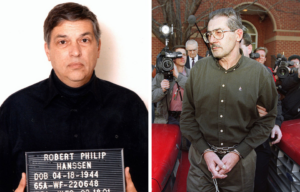
Robert Hanssen is another American who traded secrets to the Soviets. In fact, the US. Department of Justice called his espionage “possibly the worst intelligence disaster in US history.”
Hanssen became a special agent for the FBI in January 1976. Three years later, he anonymously delivered a package to GRU, containing information that revealed the name of an FBI mole in the Soviet agency. Over the next two years, he gave similar information to the Soviets and made about $20,000.
In 1985, Hanssen officially became a spy for the KGB. He delivered documents and computer files on American intelligence and counterintelligence activity both within the country and the Soviet Union. The information he passed on revealed a number of different double agents in the Soviet intelligence system. During this time, he was paid more than $500,000 in cash and jewelry.
In 1991, Hanssen stopped selling secrets to the KGB, partly because of the collapse of the Soviet Union, but also because the FBI believed there to be a mole in their midsts. However, when he became chief of the FBI’s National Security Threat List Unit, the double agent, once again, approached GRU, whom he hadn’t been in contact with in 10 months. The official Hanssen approached didn’t recognize him, and the Russians filed an official protest with the State Department, believing him to be a triple agent.
The investigation was dropped and, by 1995, Hanssen had been reassigned as a liaison between the FBI and the Department of State’s Office of Foreign Missions, where he worked almost completely unsupervised. In 1999, he, once again, renewed contact with the SVR (which replaced the KGB after the collapse of the USSR).
In February 2001, Hanssen was arrested while dropping American secret information off at a designated dead drop. He pleaded guilty for all espionage activities he’d done for Moscow since 1979, and he was able to avoid the death penalty by agreeing to participate in extensive debriefing with government agents. He was serving a life sentence without the chance of parole when he died in 2023.
Dmitri Polyakov

Dimitri Polyakov was a Soviet double agent who became one of America’s most valuable spies during the Cold War. For nearly 25 years, he served as a trusted resource for the United States, until he was abruptly called back to Moscow in 1980. The CIA wasn’t sure what had happened to him and began to wonder if Polyakov was a double agent turned triple agent, feeding the agency false tips and misinformation.
Polyakov was a decorated artillery officer in the Second World War. Following the conflict, he was recruited by GRU. As he rose through the ranks, he became increasingly disillusioned with the Communist system and sought to undermine the Soviet Union from within.
At the height of the Cold War, GRU had agents stationed around the world to learn everything possible about Americans and their way of life. During Polyakov’s second assignment in New York from 1959-61, he approached FBI counterintelligence agents and offered up his services as an informant.
For the next quarter of a century, Polyakov was the FBI’s most important double agent. He passed along important documents, from intelligence related to the Vietnam War and monthly strategy reports, to lists of military technology the USSR wanted to obtain from the West. Throughout his time as a double agent for the US, he passed along enough secret Soviet information to fill 25 deep file drawers at the CIA’s headquarters.
Polyakov risked his life to perform his duties. In Moscow, he stole the supplies directly from the GRU stockroom and passed along information in hollowed-out rocks that were picked up by American officials. To signal to his handlers, he’d take the tram past the US Embassy in Moscow and activate a miniature “burst” transmitter hidden in his pocket. While aboard, he passed information directly to American agents through his fishing rod, which had a secret compartment for information.
His information helped the US in both diplomacy and technological innovations during the Cold War. For instance, he provided evidence of a growing rift between the Soviet Union and China, which played a role in US President Richard Nixon‘s decision to open diplomatic relations with the latter in 1972.
In 1980, Polyakov was suddenly called back to Moscow, where he retired, cut all ties with American intelligence and disappeared entirely. This unsettled the American intelligence community. Some insisted he’d actually retired, while others argued he’d been executed for his espionage activities. It came to light that Polyakov had been arrested by the KGB in 1986 and sentenced to death for treason. He was executed in 1988.
Aleksandr Ogorodnik

During the Cold War, Soviet diplomat Aleksandr Ogorodnik, whom the CIA codenamed “TRIGON,” became one of the agency’s most important intelligence sources. While serving in the Soviet Foreign Ministry’s office in Bogotá, Colombia, he was approached by both the CIA and Colombia’s Administrative Department of Security. He agreed to help with counter-surveillance operations aimed at monitoring Soviet intelligence activities.
After returning to Moscow in 1974, Ogorodnik resumed his work with the CIA by using a network of dead drops managed by his case officer, Martha Peterson. Although they never met face to face, they maintained contact for about two years. During that time, he obtained a role in the Soviet Global Affairs Department, providing him with regular access to highly classified government documents.
His espionage activities came to an end after CIA translator Karl Koecher, who was secretly spying for Czechoslovak intelligence, exposed his identity. Czech intelligence relayed that information to the KGB, which ultimately led to Ogorodnik’s arrest.
During interrogation, Soviet authorities instructed him to write a confession and handed him a pen. Knowing the pen contained a cyanide pill, he bit into it. He died before investigators were able to extract any information, ensuring the full details of his espionage remained with him.
More from us: A B-52 Bomber Fire Almost Caused a Chernobyl-Like Incident in North Dakota
Peterson was also detained by the KGB in July 1977. After questioning, she was released largely unharmed and instructed to return to the United States.