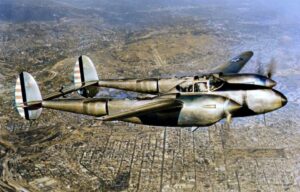
During the Second World War, a tragic and little-known incident unfolded near the Serbian city of Niš, where U.S. aircraft mistakenly attacked advancing Red Army units. The episode—later known as the Niš Incident—remains difficult to fully reconstruct, as neither the American nor Soviet governments ever released a comprehensive official report.
What is clear is that the chaos of rapidly shifting front lines, poor communication, and the fog of war combined to produce a deadly case of friendly fire between allies. Even as both nations fought toward the same goal of defeating the Axis powers, this mistake underscored how fragile coordination could be in complex, fast-moving operations. The Niš Incident stands as a sobering reminder that in war, even partners can fall victim to the unpredictable and tragic consequences of misidentification.
A big mistake by the American forces
Partisan units of the Yugoslav National Liberation Army marching into liberated Belgrade, Serbia, 1944. (Photo Credit: Sovfoto / Universal Images Group / Getty Images)
On November 7, 1944, the Soviet 6th Guards Rifle Corps was advancing toward Belgrade to reinforce the southern Hungarian front against potential German counterattacks. At the same time, the U.S. 82nd Operations Group was conducting missions meant to provide air support for Red Army operations in the region.
A fatal miscalculation set the stage for tragedy. The Soviet troops had advanced nearly 100 kilometers beyond the positions American commanders believed they occupied, but the planned airstrike went forward unchanged. Despite assurances from the U.S. Mediterranean Air Force that no German units remained near Niš, the American pilots misidentified the Soviet columns as enemy forces and launched their attack. The result was a devastating friendly-fire incident—one born from shifting front lines, incomplete intelligence, and the unforgiving pace of wartime operations.
A group of Lockheed P-38 Lightnings open-fired on the Soviet convoy. It’s unclear how many American aircraft were involved in the attack, but the Red Army quickly retaliated, believing them to be Luftwaffe-flown Focke-Wulf Fw-189 Uhus.
Orders were given to Soviet pilots, based out of the nearby Niš Constantine the Great Airport, to aid in the engagement. Multiple Yakovlev Yak-9 and Yak-3s flew to the area, immediately engaging with the P-38s in an action-filled dogfight. It took some time, but the Red Army aviators eventually identified the white stars on the American fighters and laid off their weapons.
From the ground, the Soviets tried to signal the Americans, attempting to alert them that they were mistakenly attacking their own allies. However, for reasons unknown, the Americans failed to pick up on these signals. It wasn’t until the Soviets prominently displayed the Red Star on their aircraft that the American pilots realized they were targeting an ally and swiftly ceased their attack.
This confrontation, later referred to as the Niš Incident, lasted roughly 15 minutes. Despite its short duration, it resulted in the loss of aircraft on both sides.
The exact reason behind the Niš Incident is still unknown. The official explanation says that American forces mistakenly thought the Red Army troops were German soldiers—but much of the information about the event is still classified. This has led some people to wonder if there was another reason behind the attack.
With tensions already rising between the United States and the Soviet Union at the time, some believe the incident might have been an early sign of the growing strain in their relationship. Whether this theory is true or not won’t be known for sure until more details are eventually declassified.
Each side maintains their own account of what happened. The number of casualties for each varies, with the Soviets suffering between 31-34 casualties, around 37-39 wounded and 20 cargo trucks burned. The US contends that four Soviet aircraft and two P-38 Lightnings were lost that day, while the USSR claimed the total was actually two Yaks and five P-38s.
Ultimately, the US military apologized for the mistake.