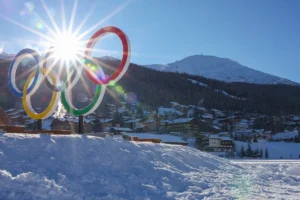
As the Winter Olympics return to screens around the world, viewers marvel at blistering speed, split-second decisions, and tactics that feel almost… military. That’s no coincidence. Many of the strategies and manoeuvres used in modern sports were first refined in war, where coordination, deception, and timing were matters of life and death. Long before they decided on medals, these ideas decided battles.
In fact, several Winter Olympic sports still carry the DNA of warfare—sometimes openly, sometimes subtly.
Formation Thinking: From Infantry Lines to Ice Hockey

One of the clearest examples comes from ice hockey. Defensive formations like the box, diamond, or neutral-zone trap echo battlefield troop layouts designed to control space and restrict movement. These concepts trace back to infantry formations used to funnel enemies into predictable paths.
The modern forecheck—where attackers aggressively pressure opponents in their own zone—resembles classic flanking manoeuvres, forcing errors through controlled chaos. The goal is the same as it was on the battlefield: break structure, exploit hesitation, and strike fast.
Speed Skating and the Art of the Draft

In speed skating and cross-country skiing, athletes tuck in behind one another to reduce air resistance. This drafting technique mirrors a military concept known as slipstreaming, used historically by marching units and later by mechanized convoys to conserve energy.
Armies learned early that moving efficiently as a unit allowed forces to travel farther and strike when opponents were already fatigued. On the ice, that same logic decides when an athlete has enough energy left for a final sprint.
Deception as Strategy: Curling and Military Feints

At first glance, curling seems worlds away from war. Yet its tactical depth relies heavily on misdirection, a classic battlefield trick. Players often place stones not to score immediately, but to force opponents into bad decisions—the sporting equivalent of a feint attack.
Military commanders have long used false advances to draw enemies out of position. Curling teams do the same, baiting rivals into defensive moves that quietly open a path to victory later in the end.
Bobsleigh, Crew Discipline, and Shock Tactics

The explosive start of bobsleigh races showcases another war-born principle: shock and synchronization. Historically, coordinated charges—where every soldier moved as one—were used to overwhelm opponents before they could react.
A bobsleigh team’s push start follows identical logic. Victory often hinges on whether every athlete hits the ice with perfect timing, converting raw force into immediate advantage before the run even begins.
Biathlon: The Most Literal Crossover

No Winter Olympic sport reflects its military roots more directly than biathlon, which evolved from Scandinavian soldier training. Competitors ski hard, then slow their breathing to shoot accurately—exactly the skill required of patrol troops moving through hostile terrain.
The sport remains a reminder that modern athletic pressure mirrors combat stress, even when the stakes are no longer survival.
Why This Resonates Today
What makes these connections compelling for modern audiences—especially during the Winter Olympics—is that they reveal sport as more than entertainment. It is a civilian echo of humanity’s oldest problem-solving system: conflict.
The ice may have replaced the battlefield, but the tactics endure. And every time an athlete outmanoeuvres a rival, they’re unknowingly reenacting lessons first learned in war—only now, the reward is gold, not survival.