Mongols

Genghis Khan is remembered as one of the fiercest warriors in history – and there’s a good reason for that.
During his life and in the years following his death, the Mongols amassed an enormous empire. They swept through Iran, Iraq, China and Kievan Rus (modern-day Russia), and those who refused to surrender were killed. It’s estimated they killed over 40 million people during their campaign.
It’s not precisely known how Khan died. Different causes have been given, including being killed in action (KIA), dying of illness or injury, or falling off his horse. Per tradition, he was buried in an unmarked grave close to his birthplace.
Comanche

The Comanche had a complicated relationship with European settlers at first. Some Native American tribes were willing to trade with the newcomers, while others chose to raid settlements to steal supplies. The Comanche, however, were more focused on expanding their territory rather than dealing directly with settlers.
Known for their incredible horseback riding skills, the Comanche were nearly impossible to defeat in battle. They emerged victorious against the Spanish, American, and Mexican forces to claim more territory. Eventually, the conflict escalated into a full-scale war with the United States. In 1875, American Civil War hero William Tecumseh Sherman led a major military campaign against the Comanche, ultimately bringing their resistance to an end.
Samurai

Visigoths

The Visigoths, a Germanic people, were once allies of the Roman Army. However, the ancient empire was left in disarray following Emperor Theodosius I’s death in 395 AD, leading to the Army’s swift collapse. Among the Visigoths, Alaric I stood out as a formidable figure, feeling the Romans had not shown him the respect he deserved for his skill in battle. This motivated him to pursue the throne, putting him in direct conflict with generals from both the eastern and western parts of the empire.
For years, the Goths raided and pillaged before turning their attention to Italy. In 408, Alaric I led 30,000 Visigoths to march on Rome, ultimately forcing the city to pay a ransom in gold, silver, silk tunics, scarlet-dyed hides, and pepper. Two years later, they struck Rome, sacking the famed city with devastating force. No one was spared as the fierce warriors destroyed the city, an event many believe largely contributed to the fall of the Roman Empire.
Yet Alaric’s victory was short-lived, as he died within the year.
Gurkhas

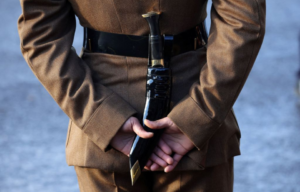
The Royal Gurkha Rifles (RGR) were established in 1994 as part of the British Army, following the merger of four regiments: 2 GR, 6 GR, 7 GR, and 10 GR. These highly skilled warriors are recruited from Nepal, a nation that is not part of the Commonwealth nor a dependent territory of the United Kingdom. Famous for their expertise with weapons, strategic acumen, and intellect, they are considered among the finest fighters worldwide.
While the Royal Gurkha Rifles is a relatively new military unit, Gurkhas have served with the British, Indian, and Nepalese armies since the Anglo-Nepalese War of 1814-16. Their heritage dates back even further, to the 8th century, and their name comes from the revered Hindu warrior Guru Gorakhnath. The men currently serving in this regiment develop their skills from an early age, building a strong foundation that prepares them for combat.
When the British struggled to overcome these formidable fighters, they chose to enlist them. During World War II, Gurkhas famously infiltrated enemy trenches at night to inspect soldiers’ boots and determine whether they belonged to Axis or Allied troops. How did they manage this? By examining the way the laces were tied (or so the legend states).
Akali-Nihang

The Akali-Nihang are a prominent and deeply respected tradition of Sikh warriors, although the precise circumstances surrounding their creation are not fully known. Recognizable by their characteristic dark-blue clothing, they were skilled with weapons, including the katar, or push dagger, which was often carried alongside swords. Their reputation was built on their willingness and ability to face vastly superior forces with resolve and martial skill. Celebrated for their bravery, discipline, and prowess in battle, the Akali-Nihang have secured an enduring place in Sikh martial history.
More from us: Yasuke: The Legendary Black Samurai Who Reforged His Life’s Path