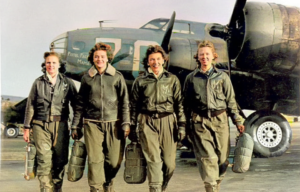
As the United States readied for the atomic missions of Hiroshima and Nagasaki, Paul Tibbets faced an unexpected obstacle: many male pilots were hesitant to fly the Boeing B-29 Superfortress. The aircraft, still relatively new, had a reputation for being highly complex and demanding to operate. To counter this reluctance, Tibbets adopted an unconventional strategy by bringing in two female aviators to demonstrate its capabilities.
These pilots handled the B-29 with notable confidence and precision, expertly managing its complicated systems and controls. Their successful flights sent a clear signal—if they could master the aircraft, other trained pilots could as well. The demonstration helped ease concerns, boosted morale among crews, and contributed to building the confidence needed for one of the most consequential missions in history.
Problems with the B-29 Superfortress’ engines

After serving in combat in both Europe and the Pacific, Paul Tibbets returned to the United States in 1943 and joined the B-29 Superfortress program. Once flight testing concluded, he was appointed director of operations for the 17th Bombardment Operational Training Wing (Very Heavy). In that position, his main responsibility was training aircrews to fly and operate the military’s newest heavy bomber.
Preparing crews for the B-29 presented significant challenges. Many pilots were hesitant to fly the aircraft because of its troublesome engines, repeated in-flight fires, and enormous dimensions. Aviators accustomed to years of experience in smaller planes now faced the task of learning a much larger and more complicated aircraft. With the Superfortress still undergoing improvements and not yet tested in combat, uncertainty and concern about its reliability were widespread among aircrews.
The women who flew the B-29 Superfortress

To address the growing unease about flying the B-29, Paul Tibbets made the bold decision to train female pilots on the aircraft in hopes of calming the nerves of their male counterparts. He recruited two Women Air Force Service Pilots (WASPs), Dora Dougherty Strother and Dorothea Johnson “Didi” Moorman, and intentionally didn’t inform them of the B-29’s troubled history to prevent any unnecessary worry.
Both Strother and Moorman adapted quickly, experiencing no issues during their training.
In fact, Tibbets specifically chose them because they had no prior experience flying four-engine aircraft. This was done to show that even pilots unfamiliar with such large bombers could successfully learn to handle the B-29. After just three days of training, Tibbets declared them ready for demonstration flights. The two pilots conducted several flights from the base in Alamogordo, New Mexico, with different aircrews aboard each time—effectively boosting morale and proving the aircraft could be flown with confidence and control.
Reception as demonstration pilots

Strother and Moorman successfully convinced the male aviators to fly the B-29. In a maintenance bulletin, Maj. Harry Shilling praised the pair’s expertise and in-depth knowledge of the aircraft, encouraging other male personnel to consult them for guidance on operating the bombers and to emulate their flawless takeoffs.
Despite their achievements, Strother and Moorman’s time as demonstration pilots was short-lived. When Tibbets’ superiors discovered women were flying B-29s, they ordered the program to be shut down.
Maj. General Barney Giles of the Air Staff remarked that the women were “putting the big football players to shame.”
Remembering their role

While their role as demonstration pilots may have seemed minor, it had a profound impact on the men who watched them. On August 2, 1995, retired US Air Force Lieutenant Colonel Harry McKeown wrote a letter to Strother about her experience flying the B-29s. Their paths had crossed in 1944 at Clovis Army Airfield, where McKeown served as Director of Maintenance & Supply and worked as a test pilot.
He recalled that after their demonstration, “we never had a pilot who didn’t want to fly the B-29.” He ended his letter on a personal note, writing, “I still want to thank you for helping me that day at Clovis. I will admit that I was scared… You made the difference in my flying from then on. I wasn’t the only pilot that felt this way, and I am sure that they would thank you too if they knew where you were.”
Life after World War II

Both women continued their service with the Women Airforce Service Pilots until it was disbanded in 1944. Dora Dougherty Strother later earned a PhD from New York University and went on to build a lengthy career with Bell Helicopter, where she worked from 1962 to 1986. She remained close with fellow pilot Joe McKeown and eventually married him in 2002. Dorothea Moorman settled in North Carolina, where she raised five children, and she kept in contact with Paul Tibbets until her death in 2005.